A buyer once wired a deposit to a CCD laser marking machine supplier that was just a rented office. From our Dongguan production floor, I hear these stories weekly.
To tell if a CCD laser marking machine supplier is a manufacturer or trader, check the business license for manufacturing scope, request a live factory video tour, verify patents and R&D resources, test customization depth, inspect sample machine details, and confirm who legally owns after-sales responsibility.
Labels alone will not protect you. On B2B platforms, the same company may call itself a manufacturer, exporter, supplier, and trader all at once. So let me walk you through the [verification signals that actually work](https://lansulaser.com/how-filter-out-reliable-ccd-laser-marking-machine-suppliers-china/), one by one.
What Signs Reveal Whether I’m Dealing With a Real Factory or Just a Middleman?
Our marketing team once found our own assembly-line photos on a trading company's website, watermarked with their logo. That day I fully understood why buyers doubt everyone.
Real factories show manufacturing scope on their business license, a physical plant separate from the sales office, a specialized catalog, in-house R&D, and staff who answer deep technical questions. Middlemen show broad unrelated catalogs, generic marketing language, reused stock photos, and trade-focused business registrations.
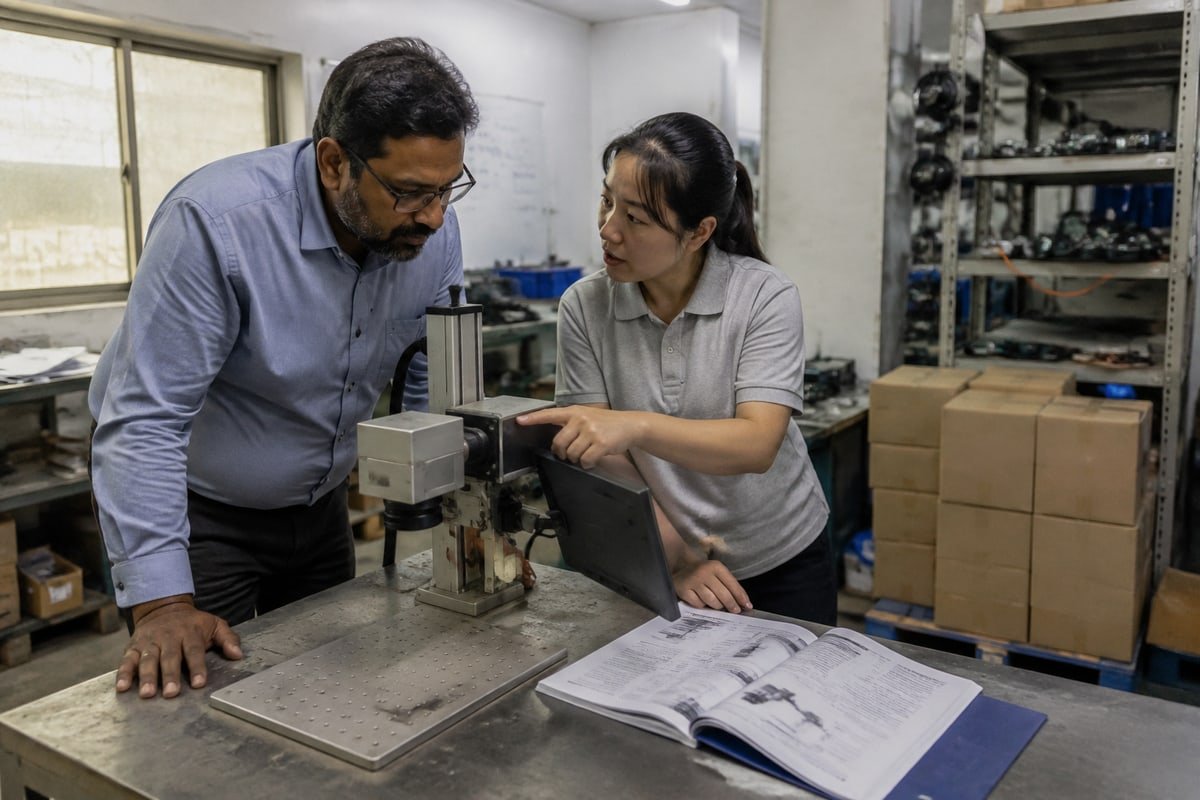
The core problem is not whether a supplier sells CCD laser marking machines. It is whether that supplier designs, assembles, tests, and supports them in-house. The market is highly fragmented across China, India, and other export regions 1, so intermediaries and hybrid sellers are everywhere. That means you need signals, not slogans.
Start With Business License Verification
Ask for the business license first. Look for words like "production," "manufacturing," "processing," or "assembly" tied to laser equipment. If the scope only lists "wholesale," "trade," "import/export," or "consulting," you are likely talking to a middleman. Then check the registered address on satellite imagery. An industrial plant looks very different from a commercial office tower.
Catalog Focus and Certificate Names
A genuine builder of a vision-guided laser system 2 usually specializes in a narrow range of laser technologies. Traders list everything from CNC routers 3 to packaging machines. Also compare names on paperwork. The company name on the ISO 9001 certification or CE certificate must match the supplier's registered name exactly, because traders often borrow certificates from their sub-suppliers.
| Signal | Manufacturer | Trader |
|---|---|---|
| Business scope | Production, assembly, processing | Sales, trade, import/export |
| Catalog | Focused laser marking range | Broad, unrelated machinery |
| Certificates | Match company name exactly | Often under another company's name |
| OEM/ODM services | Offered for this exact category | Vague or redirected to "the factory" |
| Photos and videos | Live footage of their own lines | Stock images reused across listings |
| Technical answers | Fast, specific, engineering-led | Slow, vague, price-focused |
Can I Verify a Supplier’s Manufacturing Capability Before Placing My Order?
An Italian business owner once messaged me on WhatsApp: "Stella, prove your factory exists before we talk price." I sent a live workshop video within ten minutes.
Yes. Verify manufacturing capability before ordering by checking the business license scope, matching certificates to the company name, requesting a live video tour of assembly and testing, reviewing patents and R&D staffing, confirming software ownership, and commissioning a third-party factory audit for larger orders.
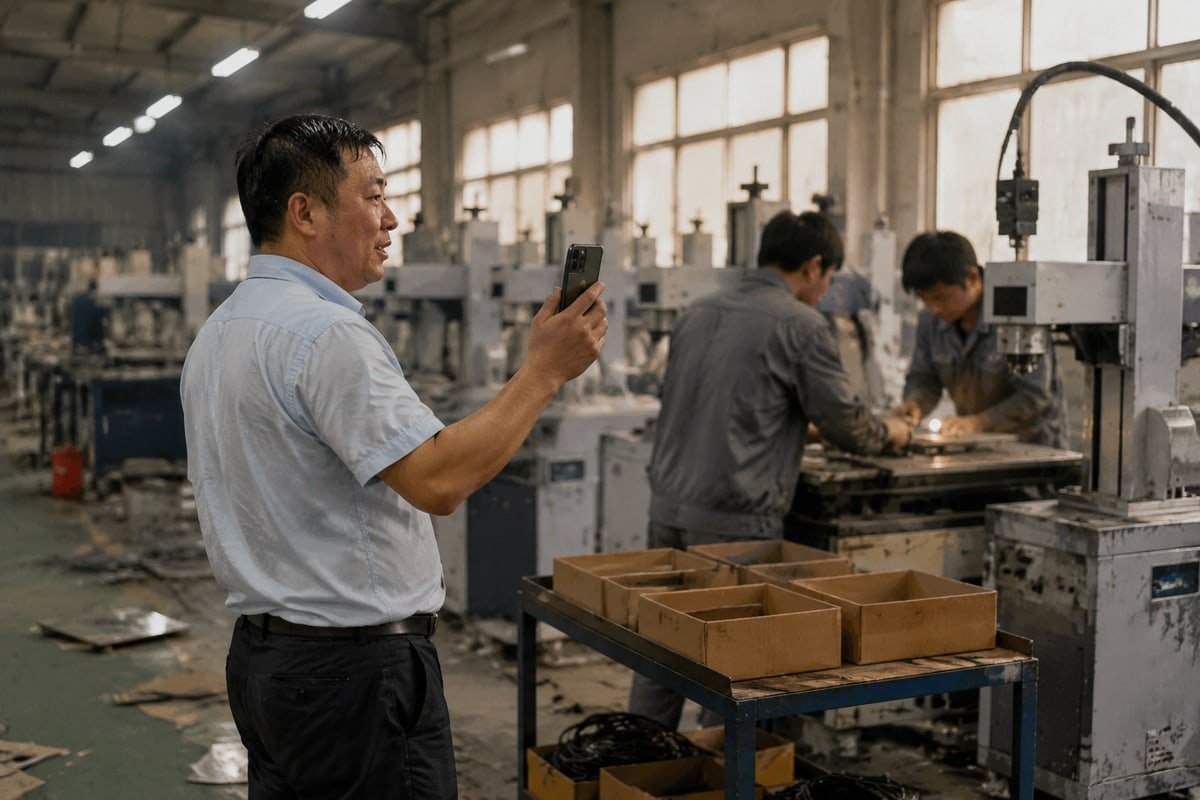
Verification is a process, not a single question. Here is the exact sequence I recommend to buyers, based on what serious purchasing managers do when they vet us. It usually takes two or three days, and it filters out most pretenders before any money moves.
- Request the business license and confirm the scope covers laser equipment manufacturing, not just trade.
- Compare the registered office with the stated factory address. A real plant usually sits in an industrial zone, separate from the sales office.
- Ask for a live, unedited factory video tour. Pre-recorded clips can be borrowed; a live walkthrough of assembly, testing, and the warehouse cannot. This is the single fastest filter I know.
- Check patents and R&D resources. A real developer holds patents or software copyrights 4 tied to CCD positioning, and can name its engineering leads. In our team of 100 people, 20 are solution design engineers, and buyers are welcome to speak with them directly. A trader cannot show you that ratio.
- Request photos of machine nameplates, QC instruments, calibration records, and packaging labels for the exact model you want.
- Ask who owns the laser source integration, control system, and vision software. In-house R&D capabilities mean the supplier can trace and fix problems at the root.
- Confirm monthly production capacity in specific numbers and ask how your configuration affects lead time.
- For scaled purchases, arrange a third-party factory audit or on-site inspection covering the quality control process from incoming parts to final marking tests.
One caution: hybrid suppliers exist. A company may build standard models in-house but trade certain accessories. That is not automatically bad. The real question is whether they control the specific machine you are buying.
How Do I Spot Red Flags That Suggest a Trader Is Posing as a Manufacturer?
Early in my export career, I learned that polished websites prove nothing. The suppliers shouting loudest about "factory direct" often had no factory at all.
Key red flags include factory-direct claims without factory evidence, refusal of live walkthroughs, certificates under a different company name, extremely broad catalogs, vague answers about CCD positioning accuracy, inconsistent company names across documents, and prices far below market with no technical explanation.
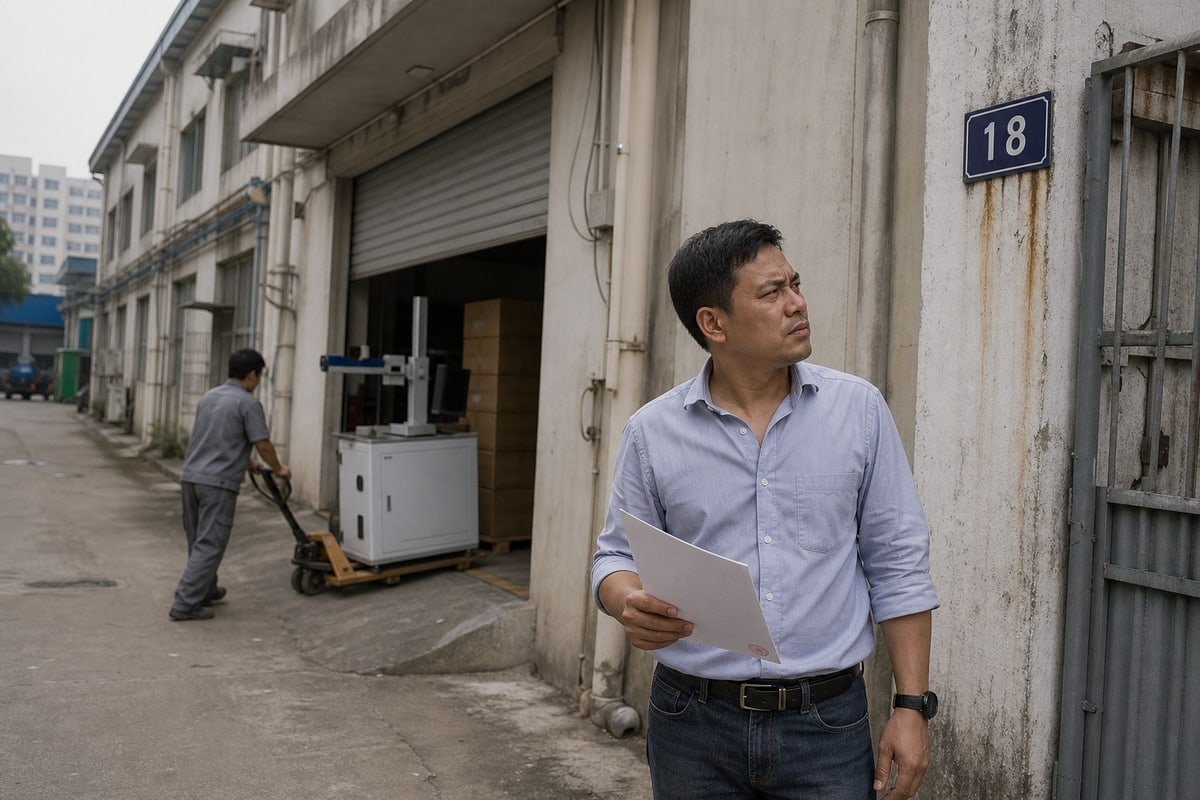
Red flags rarely appear alone. One weak signal might be innocent. Three or four together almost always mean you are dealing with an intermediary who is hiding it. The table below shows what to watch for and how to test each one in a single email or call.
| Red Flag | What It Likely Means | How to Test It |
|---|---|---|
| "Direct factory pricing" with no factory proof | Marketing language borrowed from real plants | Ask for a live video of the assembly line today |
| Cannot name the engineering lead or production manager | No in-house technical team | Request a call with the R&D engineer for your model |
| Refuses serial numbers, nameplates, or inspection records | The machine is sourced from a third party | Ask to trace the laser source serial number |
| Extremely low quote | Outsourced, unbranded build with no accountability | Ask for a line-by-line cost explanation |
| Different company names on website, invoice, and license | Shell structure or borrowed identity | Insist all documents carry one registered name |
| Sales staff cannot explain camera alignment or repeatability | No exposure to real production and calibration | Ask how they achieve marking repeatability on small parts |
But Aren’t Some Traders Legitimate?
Yes, and I say this honestly even though it works against my own interest. A good trader can aggregate multiple factories, speed up sourcing, and help you compare models. For a standard machine with no integration needs, a reputable trader may be perfectly sufficient. The problem is not trading. The problem is deception. If a company hides its role, it will also hide delivery delays, quality control gaps, and warranty limits. For integration-heavy or high-precision applications, direct manufacturer relationships give you engineering access, faster root-cause analysis, and genuine after-sales technical support that a reseller simply cannot deliver.
What Questions Should I Ask During a Factory Visit or Video Call to Confirm Authenticity?
When we host on-site inspections in Dongguan, I always weigh a trade-off: a visit costs the buyer time, but one hour of sharp questions saves months of regret.
Ask who owns the vision software source code, which components are made in-house, what the monthly production capacity is, how a custom fixture would be engineered, who legally handles warranty claims, and request the assembly log tracing the laser source and CCD camera serial numbers.

Good questions force specific answers. Vague questions invite rehearsed sales scripts. From years of hosting buyers, I have seen which questions separate real builders from resellers within minutes. Ask them in this order, and listen for detail, not confidence.
Test Customization Depth First
Customization questions are the sharpest blade. Challenge the supplier to design a custom optical lighting solution for a highly reflective or irregular part from your own line. A real engineering team will discuss lighting angles, camera exposure, fixtures, and marking tests. A trader will stall or forward your question "to the factory." Since our engineers build customized laser solutions weekly for irregular parts and automated lines, this question costs a genuine factory nothing to answer.
Inspect the Sample Machine in Detail
Then verify sample machine details. Ask for the machine's internal assembly log, its "birth certificate." A true builder can trace the laser source and CCD camera serial numbers back to its own production records and quality control process. Check the nameplate, wiring quality, and calibration report against what you were promised.
Pin Down After-Sales Responsibility
Finally, put after-sales rights and duties in writing. Who answers a fault call at 2 a.m. your time? Who stocks spare parts? Who owns the software updates?
| Question | Strong Answer | Weak Answer |
|---|---|---|
| Do you write your own vision software? | Yes, with SDK access and named developers | "The software comes with the machine" |
| Which parts are in-house vs. sourced? | Clear list with supplier names for sourced parts | "Everything is ours" with no detail |
| What is your engineer-to-sales ratio? | Specific numbers, engineers available on call | Only sales contacts offered |
| Who signs the warranty? | The factory itself, on its registered name | A third party or unclear entity |
| Can you show OEM/ODM services records for this category? | Project examples with technical drawings | Generic claims with no evidence |
Conclusion
Labels lie; production floors do not. Verify the license, watch a live factory video, test customization depth, check patents, inspect the sample machine, and pin down after-sales responsibility first.
Footnotes
1. Official US government resource for international trade data and export market information. ↩︎
2. NIST provides technical standards and research for advanced manufacturing systems. ↩︎
3. ISO develops international standards for industrial machinery and manufacturing equipment. ↩︎
4. Official government resource for verifying software intellectual property and registration. ↩︎