Buyers visiting our Dongguan production line often ask how to verify a CCD laser marking machine supplier. Many were burned before—paying factory prices to a trader with no factory.
A CCD laser marking machine supplier is a real manufacturer if it can show live factory videos, answer deep customization questions, hold its own patents, take full after-sales responsibility, and let you inspect a sample machine’s build details. Traders fail at least two of these five tests.
Labels on B2B platforms are not reliable. Many listings show “Manufacturer/Factory & Trading Company” at the same time. So the real question is not what a supplier calls itself. The real question is what it can prove. In this article, I will walk you through the exact verification methods I recommend to our own buyers, based on the five checks I use myself: watch factory videos, ask customization questions, check patent records, pin down after-sales responsibility, and inspect sample machine details.
How Can I Verify a Supplier's Factory and Production Capacity Before I Place an Order?
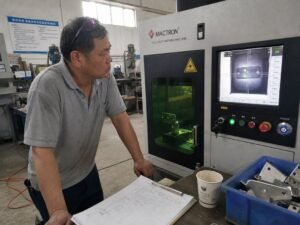
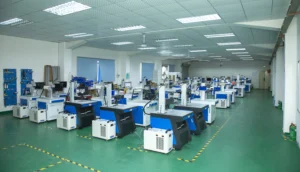
Last month, a Canadian buyer joined a live video call from our assembly floor in Dongguan. He told me it was the first time a "factory" actually showed him one.
Verify a supplier by requesting a live, unedited video tour of assembly and testing areas, checking the factory address on satellite maps, reviewing the business license scope for manufacturing terms, and confirming the quality control process with photos of machines in production.
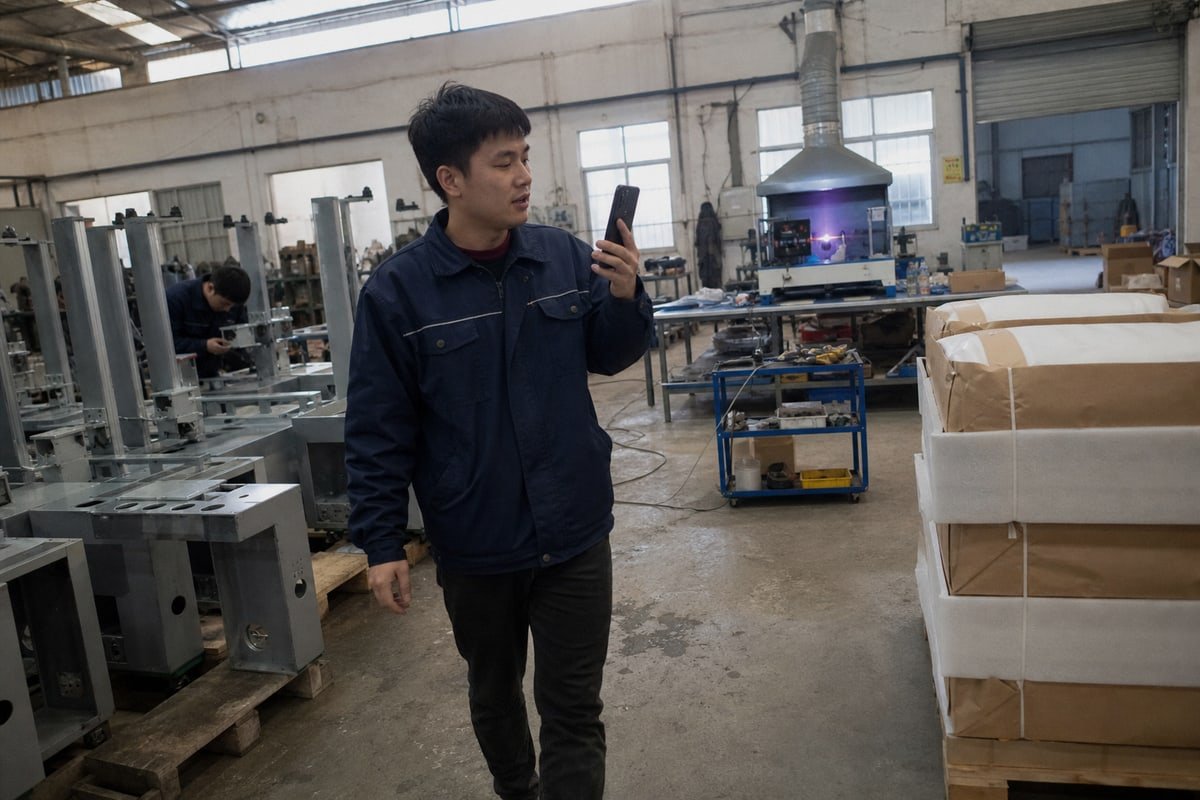
The first check on my personal list is always the same: watch the factory video. But not just any video. A pre-recorded clip can be borrowed, bought, or filmed inside someone else's workshop. That is why I tell buyers to insist on a live, unscripted video call. Ask the person to walk from the office into the workshop in one continuous shot. Ask them to turn left or right on your command. A trader renting stock footage cannot do that.
What a Real Factory Tour Should Show
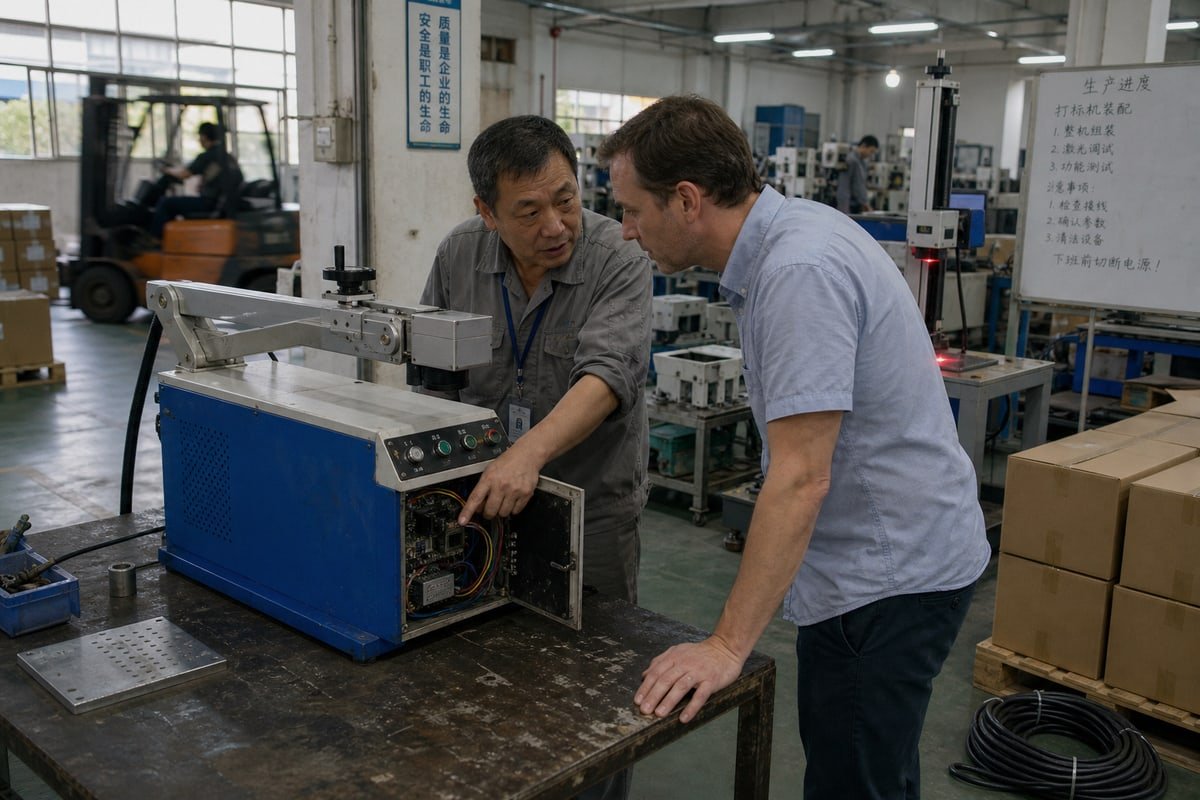
During a genuine tour, you should see three things: raw machine frames waiting for assembly, laser source testing stations 1, and finished inventory ready for packing. If you only see boxed machines in a small storage room, you are likely looking at a trader's warehouse, not a production facility. On our floor, buyers can also watch the quality control process in real time, including burn-in testing before shipment.
Check the Address Before You Check the Machine
Satellite maps are free and brutally honest. A manufacturer sits in an industrial zone with a large building footprint. A trader usually operates from a city-center office tower. Compare the address on the quotation with the address you see on the map.
| Verification Step | What to Request | Manufacturer Signal | Trader Red Flag |
|---|---|---|---|
| Live video tour | Continuous walk-through on camera | Raw frames, testing stations, inventory | Only boxed machines or excuses |
| Satellite map check | Exact factory address | Industrial zone, large footprint | City office, shared building |
| Formal factory audit | On-site or third-party inspection | Welcomed and scheduled quickly | Delayed or redirected |
| Sample machine details | Nameplate, serial number format, wiring photos | Consistent branding and serial logic | Mixed brands, relabeled plates |
The last row reflects another of my five checks: inspect the sample machine's details. Ask for close-up photos of the nameplate, the serial number format, and the internal wiring. A manufacturer's machines share one consistent identity. A trader's machines often carry mismatched labels from different source factories.
What Questions Should I Ask During a Video Call to Confirm My Supplier Is a Real Manufacturer?
I learned this lesson years ago: a polished sales call reveals nothing, but one deep technical question exposes everything. Our engineers now coach buyers on exactly what to ask.
Ask technical questions a reseller cannot answer: how the CCD visual positioning system communicates with the laser controller, whether galvo-scanner tuning is done in-house, which customization requests they accept, and who wrote the marking software. Real manufacturers answer immediately; traders must "consult the factory."
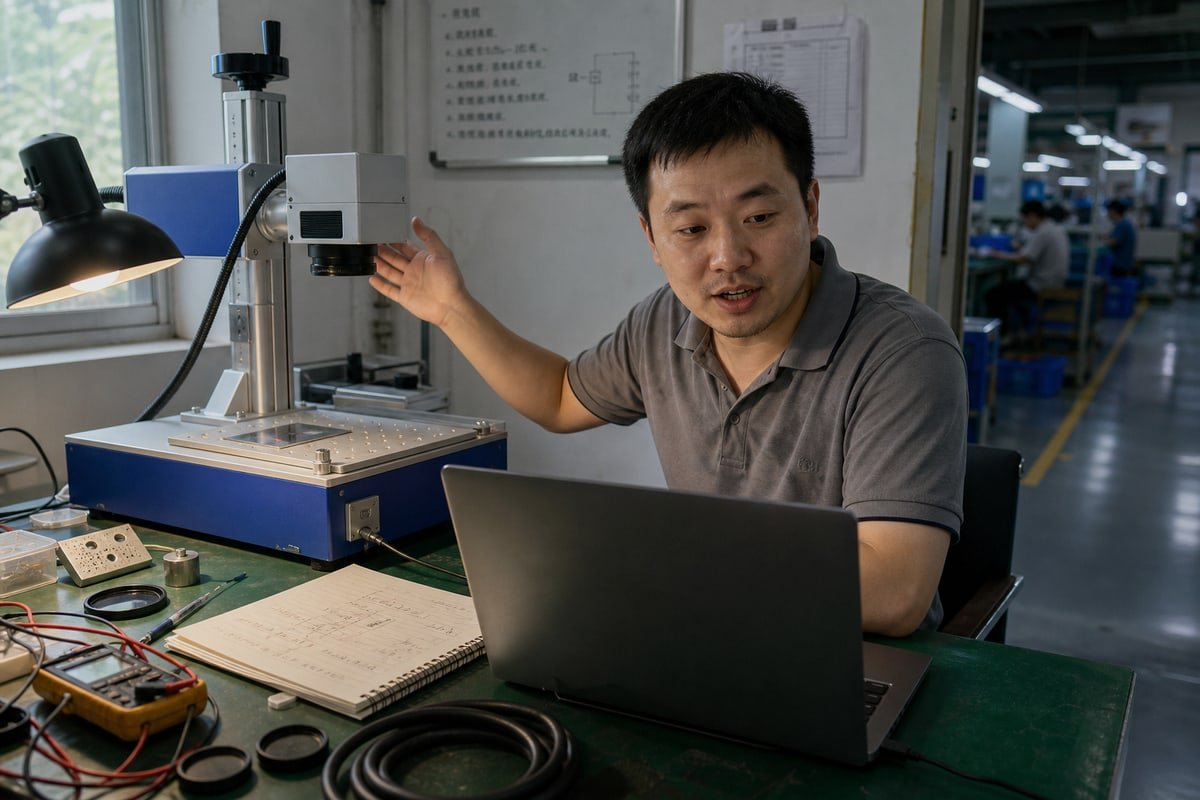
The second check on my list is simple: ask customization questions. A trader sells standard, off-the-shelf models. A manufacturer with real OEM/ODM capabilities can modify the workstation, redesign the fixture, or change the software workflow. So describe your actual part—an odd-shaped bracket, a tiny connector, a curved battery cap—and ask them to propose a modified solution on the spot. Watch how they respond. Our solution design engineers sketch fixture concepts during the call itself. A trader will promise to "check and revert."
Five Questions That Separate Engineers From Salespeople
- How does your visual positioning system talk to the laser controller? A manufacturer can explain its vision-laser handshake protocol and how it minimizes trigger-to-mark latency on a moving line.
- Is your camera side-mounted or coaxial? Manufacturers who engineer Through-The-Lens (TTL) coaxial vision paths can explain how this eliminates the parallax errors common in side-mounted trader kits.
- Can you adjust sub-pixel edge detection parameters for my micro-marking job? Only a company that controls the software can open these deep settings.
- How do you tune the galvo scanner for my marking speed? Traders typically cannot describe internal component logic at all.
- Can you synchronize multiple cameras for a large marking field? Custom stitching algorithms for multi-camera arrays sit far beyond a reseller's capability.
Also ask about laser sources. A genuine builder can compare fiber laser marking 2, MOPA, and UV options for your specific material—stainless steel, anodized aluminum, ABS, or PCB—and explain why one fits your job better. When a supplier answers every question fluently, without pausing to email an unnamed "factory," you are almost certainly talking to the people who build the machine.
Can I Trust Certifications and Business Licenses to Prove My CCD Laser Marking Machine Supplier's Identity?
On our office wall, patent certificates hang beside our quality documents. Buyers photograph them during audits, then ask me a fair question: can paper actually prove anything?
Certifications and licenses are useful but not conclusive. Check the business license scope for "manufacturing" rather than only "wholesale," verify ISO 9001 certification numbers with the issuing body, and search patent databases—owned patents on vision or marking technology strongly indicate a genuine manufacturer.

Documents matter, but you must read them correctly. The single most revealing document is the business license 3, because its registered scope is legally binding. A manufacturer's business license scope includes terms like "manufacturing" or "processing." A pure trader's scope is usually limited to "wholesale" or "import/export." Ask for the license, then check the scope line by line. Many buyers skip this two-minute step and regret it later.
The third check on my personal list goes one level deeper: check patent resources. Search national patent databases using the supplier's exact registered company name. A company that designs its own CCD laser marking machine files patents—on fixtures, on optical paths, on software methods. A trader files nothing, because it invents nothing. Patents are hard to fake and easy to verify, which makes them one of the most honest signals available.
What Each Document Actually Proves
| Document | What It Proves | What It Does NOT Prove |
|---|---|---|
| Business license | Legal identity and registered scope | Actual production activity today |
| ISO 9001 certification | A documented quality management system exists | The machines themselves are high quality |
| CE / export certificates | Compliance paperwork for target markets | Who designed or built the machine |
| Owned patents | In-house R&D on specific technology | Current production volume |
Notice the pattern: no single paper is proof. Some hybrid companies genuinely register as "Manufacturer/Factory & Trading Company," which is common in this category and not automatically bad. The trap is a pure trader hiding behind borrowed or expired certificates. So treat documents as one layer of a factory audit, and always cross-check them against the live video evidence from the first section. When the license scope, the ISO 9001 certificate number, the patent records, and the satellite image all point to the same company at the same address, you can trust the picture they form together.
Why Does It Matter to Me Whether I Buy Directly From a Manufacturer or Through a Trader?
There is a trade-off I explain honestly to every buyer who contacts our Dongguan team: traders sometimes reply faster than factories. But quoting speed means little once your line stops.
Buying directly from a manufacturer usually means direct factory pricing, deeper customization, controlled production lead times, faster spare parts, and clear after-sales responsibility. A trader adds margin and an extra communication layer, which matters most when your machine breaks or needs modification.
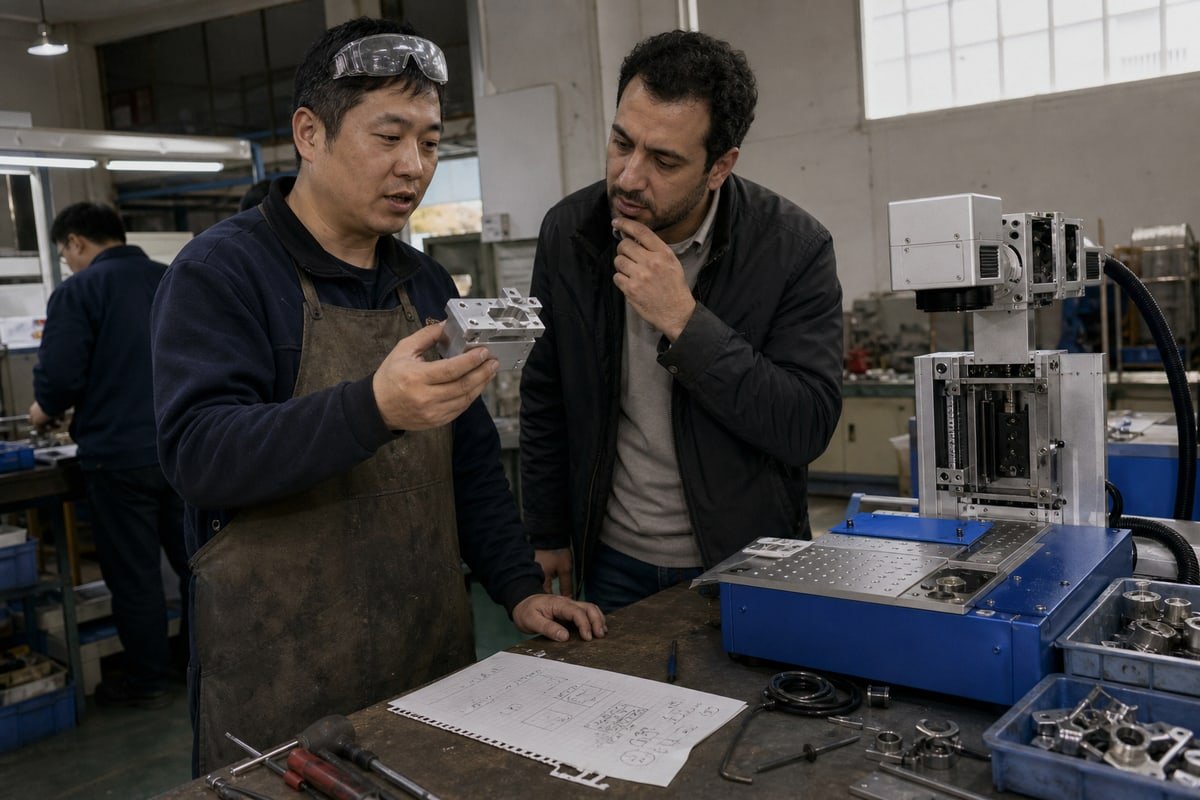
Here is the practical difference at a glance:
| Factor | Direct Manufacturer | Trader |
|---|---|---|
| Price | Direct factory pricing, controlled costs | Added margin on sourced machines |
| Customization | Fixtures, software, and line integration | Standard off-the-shelf models only |
| Production lead time | Controls its own schedule | Depends on a third-party factory |
| Communication | Deep technical authority | Fast replies, shallow answers |
| After-sales | Direct parts and remote support | Acts as an intermediary |
| Risk | Verifiable and accountable | Hidden sourcing, inconsistent quality |
Now let me raise the objection buyers often make: "A trader aggregates several factories and handles export paperwork better than a small workshop, so why not use one?" That can be true, and I will not pretend otherwise. For simple, standard machines with no service expectations, a transparent trader can work. But here is why the objection usually fails for CCD laser marking equipment. These are precision systems. They need application engineering before the sale and technical support services long after it. A trader cannot tune a vision algorithm 4 remotely at midnight. A trader cannot shorten a production lead time it does not control.
This brings me to the fourth check on my list: pin down after-sales responsibility in writing. Ask three blunt questions. Who signs the warranty—the company quoting you, or an unnamed factory behind them? Who stocks and ships spare parts, and how fast? Who performs remote troubleshooting when the machine faults at 2 a.m. your time? A manufacturer answers all three with its own name. In our export experience across markets from Italy to the USA to Southeast Asia, this single clause has saved more buyers than any price negotiation ever did. When responsibility is clear before you pay, risk drops dramatically after you pay.
Conclusion
Do not ask "Are you a manufacturer?" Ask for proof: live factory video, customization answers, patent records, written after-sales responsibility, and sample machine details. Five checks, zero regrets.
Footnotes
1. ISO standards define the operational requirements for testing stations within a manufacturing facility. ↩︎
2. Authoritative encyclopedia entry detailing the technical processes and industrial applications of laser marking technology. ↩︎
3. Official U.S. government resource for verifying international business documentation and trade compliance. ↩︎
4. IEEE is the leading authority for technical standards in computer vision and algorithmic development. ↩︎