
Choosing the right Incoterms nearly cost one of our Italian buyers double freight: his CCD laser marking machine quote said CIF, but he assumed door delivery.
The right Incoterms depend on who should control freight, who bears transfer of risk, and who can clear customs. Choose FOB for buyer control, CIF for seller-arranged sea freight with buyer-held risk, and DDP for seller-managed door delivery—then compare total landed cost, not headline price.
That buyer did not lose money in the end. We walked through the five checks I use on every export order from our Dongguan factory. This article shares those same checks. I will explain how each term works, which one gives you control, how to build a true landed cost, and what can go wrong with a supplier in China.
How do FOB, CIF, and DDP differ when importing a laser marking machine from China?
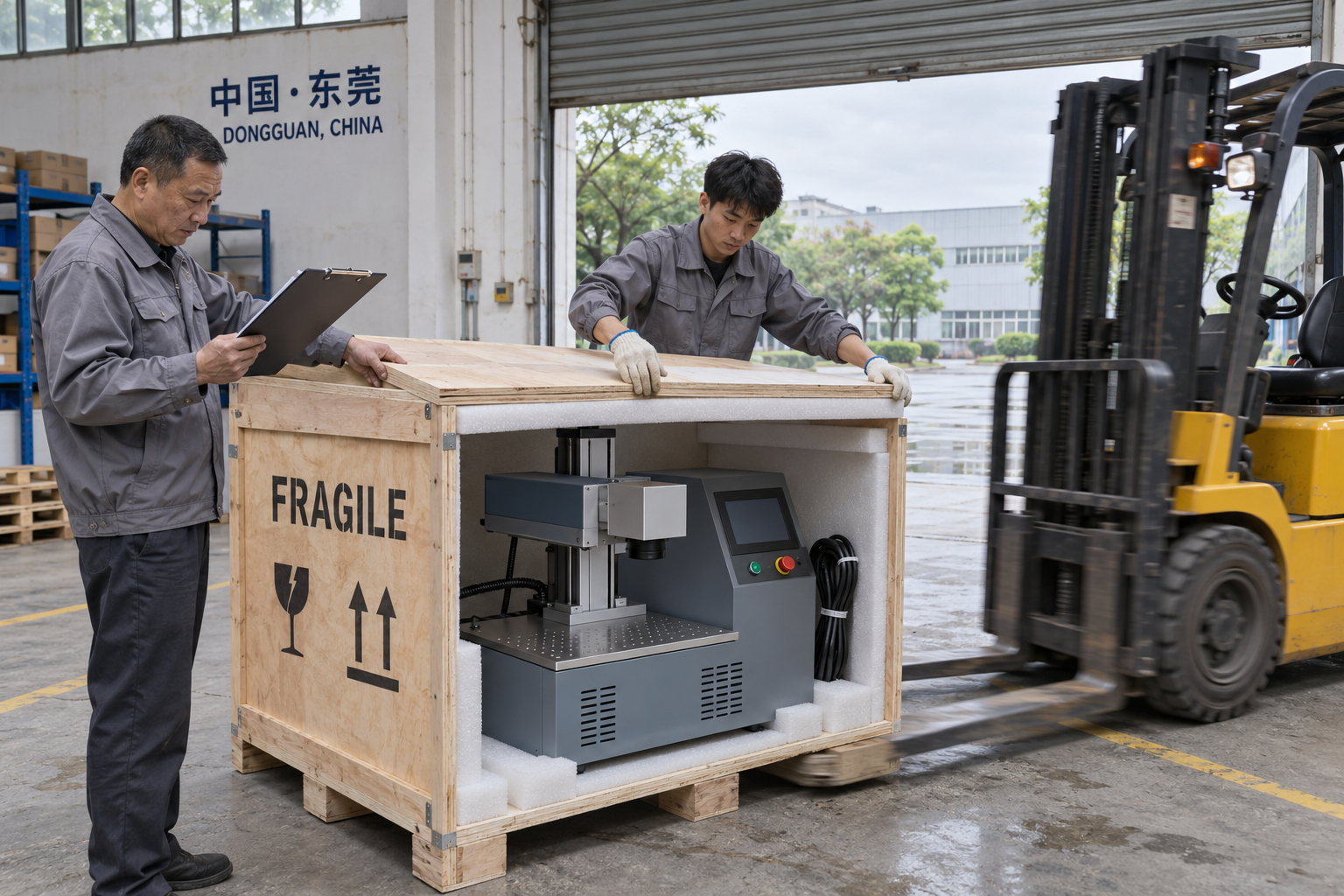
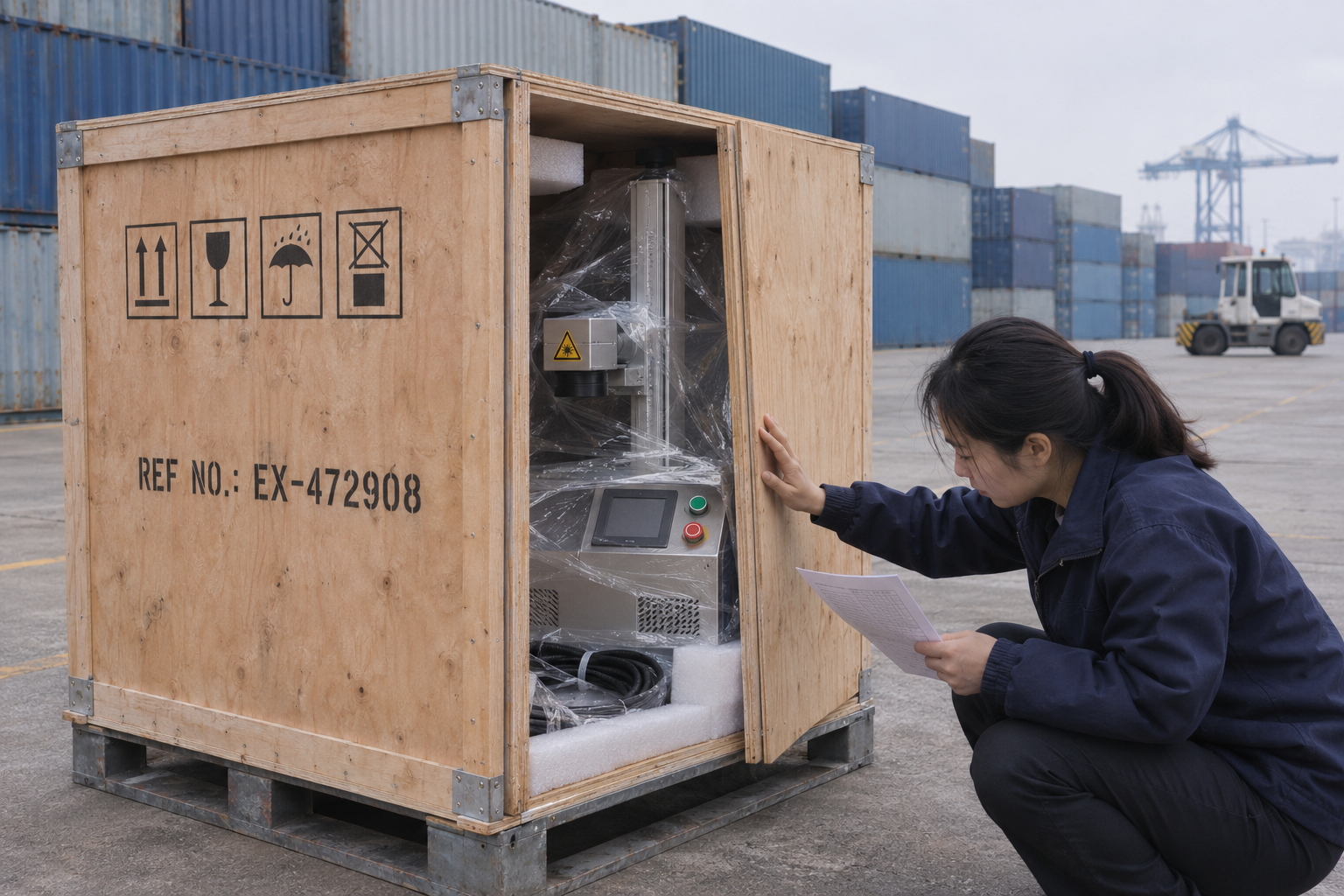
Our shipping team in Dongguan packs every CCD marking machine in the same plywood crate, yet three buyers can receive three very different invoices for it.
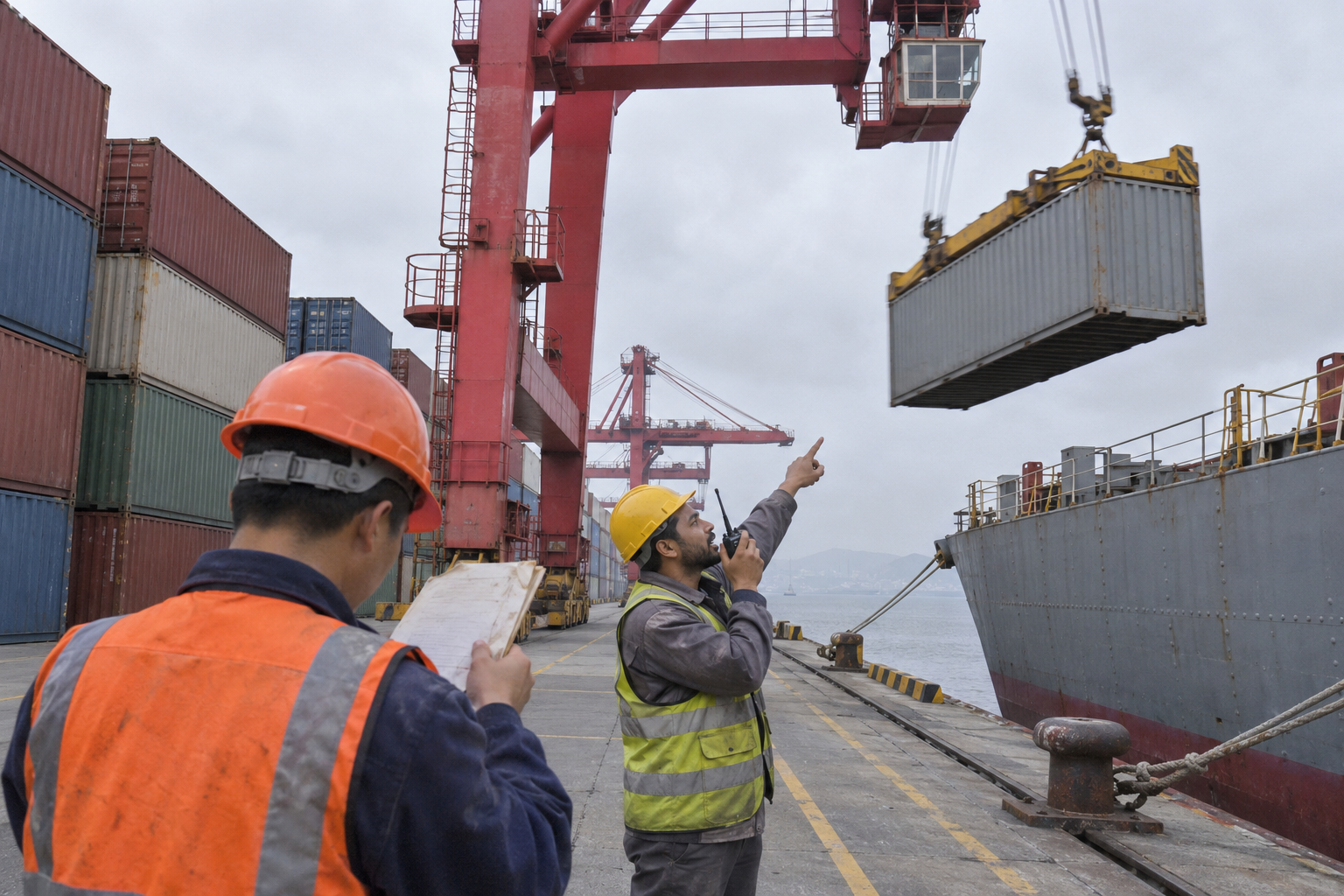
Under FOB the seller clears export and loads the machine aboard the vessel at a Chinese port; the buyer pays everything after. Under CIF the seller also pays ocean freight and minimum insurance, but risk still transfers at loading. Under DDP the seller delivers, clears import, and pays duties.
What Incoterms actually settle
Incoterms are trade rules published by the International Chamber of Commerce. The current set is Incoterms 2020 1. The rules only work when your contract names three things: the rule, the version, and the exact place. "CIF Genoa, Incoterms 2020" is clear. "CIF Italy" is not. Each rule decides who arranges transport, who pays each leg, where risk moves, and who handles export and import customs clearance. The rules do not decide ownership, payment terms, inspection, or warranty. We write those points separately in every sales contract for our laser marking machines.
FOB, CIF, and DDP side by side
| Point | FOB | CIF | DDP |
|---|---|---|---|
| Transport mode | Sea or inland waterway only | Sea or inland waterway only | Any mode, including multimodal |
| Export clearance | Seller | Seller | Seller |
| Main freight paid by | Buyer | Seller | Seller |
| Cargo insurance | Buyer, if wanted | Seller, minimum cover only | Seller, usually included in price |
| Import clearance and import duties | Buyer | Buyer | Seller |
| Transfer of risk | On board vessel at origin port | On board vessel at origin port | At named destination, ready for unloading |
| Best-fit buyer | Experienced importer with own freight forwarder 2 | Sea buyer who wants seller-booked freight | First-time or low-volume buyer who wants door delivery |
The most important row is transfer of risk. FOB and CIF move risk at the same point: when the crate is on board in China. The only real difference is who pays the ocean leg.
Why a crated machine is not classic FOB
Our machines travel in containers. FOB says delivery happens on the vessel. But we usually hand the container to the terminal days before the ship sails. Strictly speaking, FCA with the terminal or our factory as the named place fits containerized cargo better. Most buyers still ask for FOB, so we accept it. We just explain where the risk really sits during those days at the terminal.
The first check on my own list is always the same: confirm transport responsibility leg by leg before anyone talks about price. Factory, export clearance, terminal, vessel, destination port, import clearance, final delivery. One owner per leg. No gaps.
Which Incoterm gives me the most control over shipping costs and delivery timelines?
Every week I weigh the same trade-off with buyers: book the vessel ourselves for convenience, or let the buyer's freight forwarder take the wheel.
FOB gives the buyer the most control over shipping costs and delivery timelines because the buyer chooses the carrier, freight forwarder, routing, and sailing date. CIF hands those choices to the seller, and DDP trades nearly all supply chain control for convenience and a single bundled price.

The control ladder
Think of the three terms as a ladder. Each step up adds seller service and removes buyer control.
- FOB. You pick the forwarder. You see every line: freight, insurance, local handling. You decide when the box sails.
- CIF. We book the freight. You get an arrival estimate and an insurance certificate. You do not see the carrier's rate sheet.
- DDP. We handle everything to your door. You get one number and one delivery date.
What control buys you
| Control factor | FOB | CIF | DDP |
|---|---|---|---|
| Cost transparency | Full breakdown | Product plus freight bundle | One all-in price |
| Carrier choice | Buyer | Seller | Seller |
| Sailing schedule | Buyer's forwarder | Seller's forwarder | Seller's forwarder |
| Carbon data for Scope 3 reporting | Buyer selects low-carbon carriers | Limited | Limited |
| Bill of Lading flow | Fast electronic transfer to buyer's bank | Seller-arranged | Seller-arranged |
Two trends push large importers toward FOB. First, ESG reporting. Buyers who must report Scope 3 emissions want to pick carriers using fuel efficiency data. FOB gives them that authority. Second, electronic Bills of Lading. An eBL moves title to the buyer's bank faster and more securely, which suits FOB where the buyer already controls the carriage.
When control costs more than it saves
Here is a buyer objection I hear often: "FOB is always cheapest." It is not. A single crated CCD laser marking machine is a small shipment. A buyer with no volume may face minimum charges and worse rates than our forwarder, who consolidates cargo out of Shenzhen every week. For a one-off order, CIF or DDP can land cheaper once you add the admin hours.
Delivery timing is the other side. Our Italian buyer's biggest worry was delays. Under FOB, if his forwarder misses a booking, that delay is his. Under CIF, we own the booking and chase the cut-off. Under DDP, we commit to a door date and carry the schedule risk. So the real question is not "which term is fastest." It is "who do you trust to manage the clock."
How do I calculate the true landed cost of my CCD laser marking machine under each Incoterm?
A purchasing manager in Canada once asked me why our FOB quote looked cheapest on paper but his accountant's final number landed highest.
Calculate true landed cost by adding product price, export packing, origin fees, main freight, cargo insurance, terminal handling charges, customs brokerage, import duties and VAT, inland delivery, and unloading. Under FOB the buyer adds most items; under CIF, everything after the destination port; under DDP, mainly unloading and exclusions.
A four-step calculation
- List every cost line from our factory gate to your workshop floor.
- Mark who pays each line under the term you are comparing.
- Fill in real quotes, not guesses. Ask your freight forwarder and customs broker.
- Compare totals at the same destination with the same insurance level.
Step four matters most. A FOB total to the port is not comparable to a DDP total to your door.
The landed cost worksheet
| Cost line | FOB | CIF | DDP |
|---|---|---|---|
| Product price and export crate | Seller | Seller | Seller |
| Inland transport Dongguan to port | Seller | Seller | Seller |
| Export clearance and origin docs | Seller | Seller | Seller |
| Ocean freight 3 | Buyer | Seller | Seller |
| Cargo insurance | Buyer | Seller, minimum cover | Seller |
| Destination terminal handling charges | Buyer | Buyer, usually | Seller |
| Customs brokerage | Buyer | Buyer | Seller |
| Import duties and import VAT | Buyer | Buyer | Seller |
| Inland delivery to your site | Buyer | Buyer | Seller |
| Unloading at your door | Buyer | Buyer | Buyer, unless stated |
| Demurrage, storage, inspection fees | Buyer | Buyer | Depends on contract |
| Bank and foreign exchange charges | Buyer | Buyer | Buyer |
| Seller's embedded service margin | None | Freight margin | Freight, brokerage, duty, risk margin |
An illustrative example
These figures are examples only, not benchmarks. Suppose a CCD laser marking machine is quoted at 20,000 under FOB Shenzhen. Add 1,800 ocean freight, 150 insurance, 400 terminal handling, 300 brokerage, 1,200 duty and VAT, and 500 inland delivery. The landed figure is 24,350. A CIF quote of 22,000 for the same machine still needs the 400, 300, 1,200, and 500 added. That gives 24,400. A DDP quote of 25,500 looks dearest. But it includes our forwarder's time, our broker, and our risk during transit. If your team would spend two days managing the import, the DDP number may be the cheapest in practice.
My second check is exactly this: total up freight, insurance, duties, and customs clearance fees 4 before comparing any two quotes. The quoted product price is only one line on the sheet.
Questions to ask before you trust any quote
Does CIF include destination port charges? Usually not. Ask us to state it. Does DDP include unloading? Under Incoterms 2020, DDP is complete when the truck arrives ready for unloading. Lifting a crated machine off the truck is your job unless we write otherwise. We often arrange a forklift at the buyer's site, but it goes in the contract as a named service.
What risks should I consider when choosing between FOB, CIF, and DDP for my supplier in China?
The hardest lesson from our export work came from a DDP order where nobody had checked whether we could legally act as importer of record.
Key risks are transfer of risk at origin loading under FOB and CIF, thin ICC Clause C cargo insurance under CIF, and under DDP the seller's inability to act as importer of record, lost VAT recovery, hidden markups, and permanent establishment exposure. Confirm these points in the contract.

Risk by term
| Risk | FOB | CIF | DDP |
|---|---|---|---|
| Damage during ocean transit | Buyer's loss | Buyer's loss, claim on seller's policy | Seller's loss |
| Insurance gaps | Buyer chooses cover | ICC Clause C minimum; theft and partial damage often excluded | Depends on seller's policy |
| Customs declaration errors | Buyer's broker liable | Buyer's broker liable | Seller as importer of record |
| VAT or GST recovery | Buyer reclaims | Buyer reclaims | Often lost; seller is importer |
| Seller tax exposure in your country | None | None | Possible permanent establishment |
| Hidden cost markups | Low | Medium | High |
The CIF insurance trap
CIF forces us to insure the cargo. But the rule only requires the minimum, which is Institute Cargo Clauses C 5. That cover handles major events like fire or sinking. It often excludes theft, water damage, or a cracked galvo head from rough handling. For a precision CCD marking machine, that gap is serious. My third check is to confirm where risk moves and what the policy actually pays. We can upgrade to Clauses A if the contract asks for it. You should also know the insurer, the deductible, the claim deadline, and whether you are the named beneficiary.
The DDP legal trap
DDP sounds safest for the buyer. It carries three hidden risks. First, some countries do not let a nonresident seller act as importer of record. Second, because we would be the importer, you may lose the right to reclaim import VAT or GST. Third, repeated DDP deliveries can create permanent establishment status for us in your country, which brings corporate tax questions. When any of these apply, we offer DAP instead. We deliver to your door, and you stay the importer. My fourth check is to assess your customs capability honestly. If you have a broker and an import registration, keep clearance on your side.
Supplier authenticity and the contract
Buyers like Jerry in Italy ask a fair question: how do I know the supplier will honor the term? A real factory will show you the crate, the loading photos, and the Bill of Lading number without being asked. Our team of 20 solution engineers works beside the production line, so a video call to the packing area is normal for us.
My fifth check is the contract itself. Write the term, the version, and the exact place: "DDP, Via Roma 12, Milan, Incoterms 2020." Add the shipment date, insurance level, who unloads, what happens with demurrage, which documents you receive, and what we do if we cannot import. A vague term invites a dispute. A precise one prevents it.
Conclusion
Match the Incoterm to transport mode, pin down the risk transfer point, confirm customs feasibility, and compare full landed cost. Then write the place and version into the contract.
Footnotes
1. Official ICC page defining the Incoterms 2020 standards used in international trade contracts. ↩︎
2. Wikipedia entry explaining the role and functions of a freight forwarder in international logistics. ↩︎
3. U.S. government guide explaining the responsibilities and costs associated with different Incoterms. ↩︎
4. Official U.S. Customs and Border Protection resource for basic import and export requirements. ↩︎
5. Explains the minimum cargo insurance standard referenced for CIF coverage gaps. ↩︎