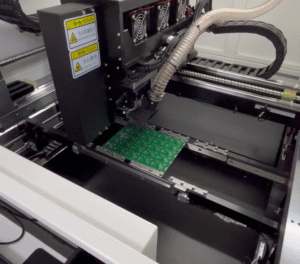


A buyer told our Dongguan team chat promises never became a quotation. Poor use of email and messaging tools with CCD laser marking machine suppliers costs weeks.
Use email for quotations, specifications, contracts, and technical files, and use WhatsApp or WeChat for quick questions, photos, and urgent updates. State the model, requirements, issue, and deadline in every message. Follow up weekly, confirm price and delivery changes by email, and agree response times with a named contact.
That is the short answer. The rest of this guide shows you how to put it into practice, from the first inquiry email to the final shipping notice.
What Information Should I Include When Emailing a CCD Laser Marking Machine Supplier?
Our solution engineers once received an inquiry that said only "laser machine for metal parts, best price." Twenty emails later we still did not know the part size.
Include the material and surface finish, part dimensions, mark content and size, required accuracy, hourly volume, loading method, camera recognition needs, voltage, and destination country. Attach photos with a scale, drawings, and sample artwork. Ask the supplier to recommend laser wavelength and camera setup, and set a quotation deadline.

A supplier can only recommend the right machine if you give them real production data. A CCD laser marking machine is two systems in one. There is the laser process, and there is the camera vision workflow 1. Your first email needs to cover both. Our 20 solution design engineers in Dongguan spend most of their first day on an inquiry just filling gaps. A complete brief skips that day.
Build a technical brief before you write
Write the brief once. Then send the same brief to three to five suppliers. This is the only way to compare quotations side by side. The table below shows what we need to see before we can size a laser or a lens.
| Brief item | What to state | Why it matters |
|---|---|---|
| Material | Type, grade, color, coating, finish | Fiber, CO2, and UV lasers suit different surfaces |
| Part geometry | Dimensions, weight, position variation | Sets lens field, fixture, and camera field of view |
| Mark content | Text, serial, barcode, QR, logo | A traceability code needs verification; a logo does not |
| Mark quality | Size, depth, contrast, permanence | Decides power, speed, and pass count |
| Volume | Parts per hour or per day | Drives full cycle-time calculation |
| Loading | Manual, fixture, or conveyor | Changes automation and camera setup |
| Recognition task | Orientation, holes, edges, existing features | Defines the vision algorithm |
| Environment | Dust, vibration, temperature, lighting | Affects camera stability and enclosure |
| Electrical | Voltage and frequency | Avoids wrong configuration at shipment |
| Destination | Country and safety requirements | Determines CE or other documentation |
Subject line and structure
Use a clear subject line. For example: "CCD UV laser marking machine inquiry for ABS connector housings." Name the machine type, the laser source if you know it, and the application. Send it from your company domain, not a free webmail account. We treat domain emails more seriously, and so do other serious suppliers.
Inside the email, keep one habit. State the equipment model or type, the technical requirement, the question, and the deadline. Do this in every message, not just the first one. It removes guesswork on both sides.
Questions that need a written answer
Do not assume every CCD machine uses the same laser. Ask the supplier to recommend the wavelength and power range and to explain why. A 355 nm UV source behaves very differently from a fiber source on plastics. Also ask about the usable marking field, not the headline field size. Ask for the complete cycle time 2, including loading, recognition, marking, and verification. One current CCD UV listing advertises up to 7,000 mm/s scan speed. That number says nothing about parts per hour on your product. Ask for a measured cycle time on your actual part instead. Finally, ask whether the software can import variable data from a spreadsheet or ERP, and whether it verifies the code after marking.
How Can I Use WhatsApp to Get Faster Responses From My Laser Marking Machine Supplier?
An Italian business owner sends us WhatsApp voice notes at 8 a.m. his time. That works for a photo of a bad mark. It fails for a final specification.
Use WhatsApp for short questions, close-up photos, loading videos, software screenshots, and live demo clarifications. Agree on a reply time limit and a named technical contact. Account for the time zone, keep each message specific, and summarize every decision in a dated email so chats never replace the formal record.

Messaging apps are fast because they are informal. That same informality is the risk. Our export team works with buyers in Italy, Germany, the USA, Vietnam, and the UAE, and almost every one of them uses WhatsApp or WeChat daily. The buyers who get the fastest useful answers follow a simple two-channel rule.
The two-channel rule
| Send by WhatsApp or WeChat | Send by email |
|---|---|
| Close-up photo of a surface defect | Formal quotation and revision |
| Short video of part loading | Technical specification and drawings |
| Screenshot of a software setting | Test report and marked sample results |
| Question during a live demonstration | Warranty terms and exclusions |
| Request for a quick machine video | Contract, payment, and delivery terms |
| "Did you receive my email?" | Compliance certificates and declarations |
Photos should include a ruler or scale. A ten-second video of your current process often shows glare, part movement, or orientation problems that a paragraph cannot describe.
A five-step fast-response mechanism
- Agree on a reply window. For example, chat questions answered within one working day, quotation revisions within three.
- Ask for one dedicated contact. A named engineer who knows your project beats a rotating sales inbox.
- Respect the time zone. Dongguan is GMT+8. A message sent at 5 p.m. in Milan lands near midnight here. Mark it "urgent" only when it is.
- Request a video call with screen sharing. Ask the engineer to walk through the CCD calibration and recipe setup on your parts, not on a prepared demo piece.
- Close every chat thread with an email summary.
Why the email summary matters
Chats fragment. They are hard to search and disconnected from the purchase record. So after any decision, send a short message like this: "Confirming today's discussion: the machine will use a fiber source, a 5-megapixel camera with ring lighting, a two-station fixture, and database import. Acceptance criteria are a readable code after abrasion test and a cycle time under eight seconds. Please include these in the revised quotation." Some buyers worry that this slows things down. In our experience it does the opposite. It stops the same question coming back three times. Export the chat history to your project folder as well. You will want it if a warranty claim appears later.
What Questions Should I Ask to Verify a CCD Laser Marking Machine Supplier's Authenticity?
We learned something uncomfortable over years of exporting to Europe and Southeast Asia: buyers rarely ask for documents that take us minutes to send.
Ask for the business license, ISO and CE certificates with the legal entity name and validity period, factory address, and a live video tour. Request an actual-part marking test with settings, cycle time, and recognition rate, a named engineer, warranty terms in writing, and references in your region.

Supplier authenticity is a top pain point for most buyers who find us on Google. A polished website proves very little. A real factory with real engineers can prove itself in three ways: documents, demonstration, and disclosure. Our team of 100 people in Dongguan, including 20 solution design engineers, can show all three on request. Any serious supplier should.
Documents to request by email
Ask for these before paying any deposit. Check each one against the company name you are paying.
- Business license 3 showing the legal entity and registered address.
- ISO and CE certificates 4. Check the entity named, the scope, the validity period, and the product or system identified.
- Declaration of conformity for the complete machine, including enclosure and laser classification.
- Manuals and warning labels in your required language.
- Confirmation of voltage and frequency configuration 5 for your country.
Then request a live video tour on WhatsApp or a video call. Ask to see the assembly floor and a machine under test. A recorded video can be anything. A live walk with your questions in real time is much harder to fake.
Questions that expose real capability
Many buyers focus on megapixels. A 12-megapixel camera is not automatically better than a 5-megapixel one. Lighting, lens focal length, working distance, depth of field, and the recognition algorithm 6 matter more. So ask:
- Which recognition method is used: fiducial marks, edge detection, or pattern matching?
- What is the recognition time and the false-reject rate on my parts?
- How is glare managed on my surface finish?
- Can recipes handle my product variants?
- Does the system log images and marked data?
The strongest test is simple. Send representative samples and ask for a documented marking test on your exact material, geometry, and artwork. Ask for the settings, lens and field data, recognition success rate, measured cycle time, and an explanation of any failed samples. A supplier who refuses to test your actual parts is telling you something.
Warning signs in supplier communication
| Red flag | What it usually means | What to do |
|---|---|---|
| Refuses actual-part test | Cannot guarantee results on your product | Move on |
| Quotation omits wavelength or lens field | Generic machine, not a solution | Ask for a line-item quotation |
| Claims based only on maximum speed | No throughput calculation | Request full cycle time |
| Specs differ between chat, email, and quote | Weak internal control | Require one revised document |
| Pressure to pay before final spec | Cash before commitment | Approve specification first |
| No named technical contact | Sales-only operation | Insist on an engineer |
| Very low price with many "optional" items | Hidden total cost | Ask for a three-year cost breakdown |
One objection we hear often: "A local supplier is safer than an overseas one." Sometimes. A local supplier may offer faster on-site service at a higher price. An overseas supplier may offer better value but adds language, customs, and training risk. The right answer is not geography. It is whether the supplier tests your parts, discloses limits, and documents what you will receive.
How Do I Follow Up With Suppliers to Avoid Delivery Delays on My Laser Marking Order?
Every week our production planner weighs the same trade-off: ship a machine on the promised date, or hold it one more day for a full CCD recognition test.
Set a milestone schedule in the purchase order, then request a weekly progress update by email or WhatsApp covering production, testing, and shipping. Ask for photos or videos at each stage, confirm every change to configuration or delivery date in writing, and escalate missed milestones to your named contact immediately.

Delivery delays rarely appear overnight. They build quietly when nobody asks the right question at the right week. A buyer who waits until the promised ship date to ask "is it ready?" has already lost control. A buyer who checks in every week catches a late laser source or a camera lighting problem while there is still time to fix it.
Milestones and the evidence to request
Put these milestones into the purchase order with target dates. Then ask for proof at each one.
| Milestone | Typical evidence to request | Channel |
|---|---|---|
| Order confirmation | Final specification with revision number | |
| Core components secured | Laser source and camera model confirmed | |
| Assembly started | Photo of your machine on the floor | |
| Software and recipes loaded | Screenshot of your product recipe | |
| Factory acceptance test | Video of complete cycle on your actual parts | WhatsApp, then email report |
| Packing | Photos of crate and labels | |
| Shipping | Booking, packing list, tracking |
The factory acceptance test matters most. Ask for a video that shows the full cycle: loading, camera recognition, marking, verification, and unloading. A clip showing only the mark hides the parts of the cycle where time is lost.
A weekly follow-up routine
- Every Monday, send one short message: "Project [name], week [number]: please confirm current stage, next milestone, and any risk to the delivery date."
- Keep the message specific. Name the machine, the configuration, the question, and when you need the answer.
- If the reply is vague, ask for a photo or a video the same day.
- If a milestone slips, ask for the cause, the new date, and the recovery plan. Get it in writing.
- Save every reply, photo, and video in one project folder with the date.
Written confirmation for every change
Price, configuration, delivery date, and technical changes must be confirmed by email. If a supplier agrees on WhatsApp to swap a lens or add a rotary axis, reply with "please confirm by email with a revised quotation." Give each revision a number. This protects both sides. On our side, it stops a verbal "yes" from becoming an unplanned change that delays the build. On your side, it means the machine that arrives matches the document you approved.
Some buyers tell us that email feels slow for follow-up. It is slower than a chat. But a chat is not a record. The combination works best: chat for the quick check-in, email for the confirmed answer. That archive is also what you will rely on if a warranty claim or quality dispute arises after delivery.
Conclusion
Vague chats create delays, disputes, and the wrong machine. Clear emails, disciplined WhatsApp use, verified suppliers, and weekly follow-ups turn communication into a tool that protects your laser marking investment.
Footnotes
1. Machine vision background clarifies the camera-based process referenced alongside the laser system. ↩︎
2. NIST manufacturing resources explain cycle time measurement standards relevant to throughput calculations. ↩︎
3. WTO provides authoritative guidance on trade documentation relevant to verifying overseas business licenses. ↩︎
4. ISO is the authoritative body for quality and certification standards referenced for supplier verification. ↩︎
5. IEC sets international electrical standards governing voltage and frequency compliance for exported equipment. ↩︎
6. Background on pattern recognition explains how CCD camera algorithms identify part features. ↩︎