A Certificate of Origin for a CCD laser marking machine sounds simple until your cargo sits at customs waiting for it. I have watched buyers lose weeks over this one paper. At our Dongguan factory, we treat origin documents as part of the machine itself.
To verify a supplier can provide a Certificate of Origin on time, confirm their export registration, request a sample certificate from a past order with the same HS code, ask who issues the document and how long it takes, then write the document type, deadline, and liability into your purchase contract.
That is the short answer. Now let me walk you through each verification step, because the details decide whether your machine clears customs smoothly or gets stuck.
What Documents Should I Request to Confirm a Supplier's Certificate of Origin Capability?
Years ago, a buyer from Turkey asked me for proof before paying his deposit. His caution taught me something: serious buyers verify paperwork capability first, and serious suppliers welcome it.
Request the supplier's business license, export registration or Exporter Record with CCPIT or the local Chamber of Commerce, a masked sample Certificate of Origin from a similar past order, and written confirmation of the exact certificate type your country requires, such as a General CO or an FTA form.
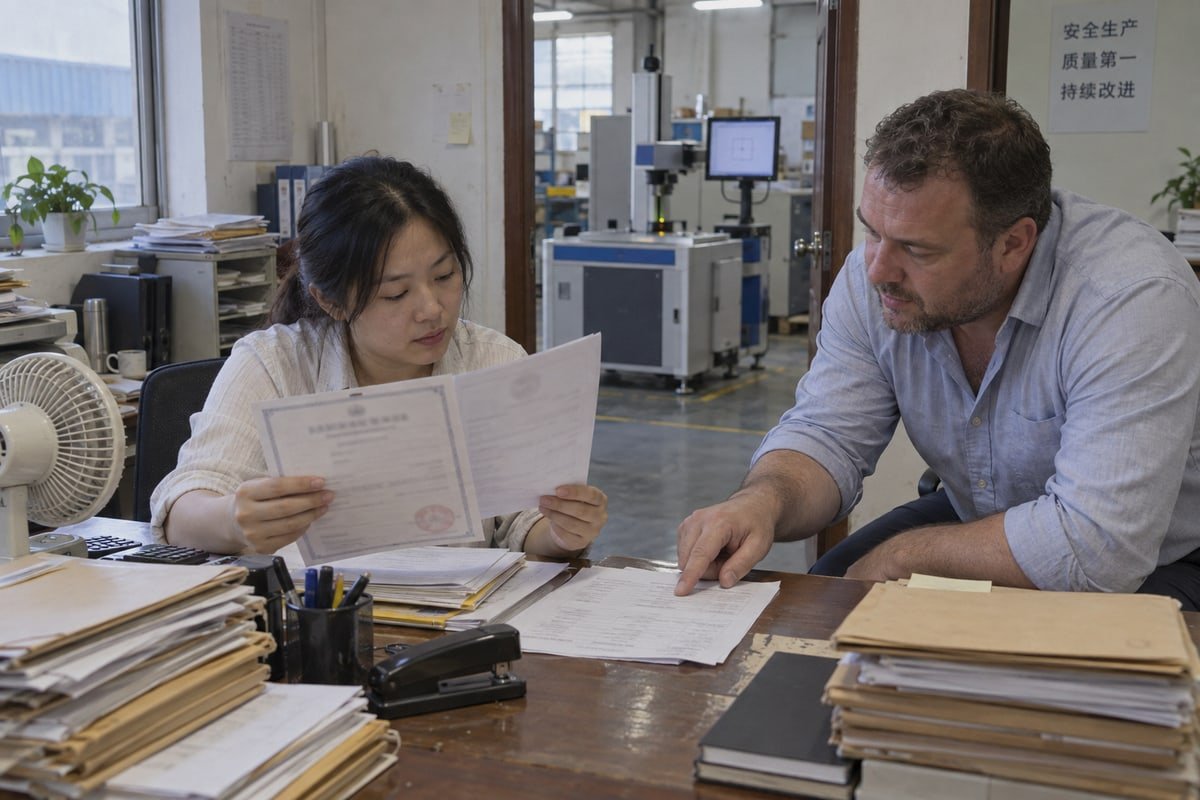
The core question here is legal authority. In China, a company cannot simply print a Certificate of Origin. The document must be issued through official channels, and the applicant must hold a valid business license and foreign trade registration. First-time applicants in China typically need to submit the business license, foreign trade qualification, a power of attorney for the declaring staff, the mark of origin format, and the commercial invoice. If your supplier has never done this before, your order becomes their practice run. You do not want that.
So here is what I tell buyers to collect, in order of importance.
The Document Checklist
| Document to Request | What It Proves | Red Flag If Missing |
|---|---|---|
| Business license | The company legally exists | Possible trading shell or middleman |
| Export registration / Exporter Record | Legal authority to apply for a CO | They must outsource, adding delay |
| CCPIT or Chamber registration proof | Access to Chamber of Commerce 1 authentication | First-time application risk |
| Sample CO for the same HS code | Familiarity with your product category | HS code classification 2 errors likely |
| Sample commercial invoice and packing list | Consistent document formatting | Data mismatch risk at customs |
Why the Sample Certificate Matters Most
A masked sample from a previous CCD laser marking machine shipment tells you three things at once. First, the supplier has actually issued this document before. Second, the HS code classification on the sample should match what your customs broker expects for vision-guided laser marking equipment. Third, you can see whether the product description, model name, and origin wording follow a clean, consistent format. When we send samples to new buyers, we mask the previous client's details but keep the certificate number visible so the buyer can understand the verification format. A supplier who refuses to show any sample either has no history or has something to hide. Also confirm which certificate type applies to you. A General CO, a Form E for ASEAN, or an RCEP certificate are not interchangeable. Applying for the wrong type is one of the most common causes of documentation delays, and it usually surfaces only days before shipment.
How Can I Check a Supplier's Track Record for On-Time Certificate of Origin Delivery?
When we shipped our first CCD laser marking machine to Italy, the buyer checked our shipment history through customs data before signing anything. Smart move, and easier than most buyers think.
Check the supplier's export history through global trade databases or customs data, verify past certificates on China's official export-origin platform using the certificate and invoice numbers, and ask former buyers in your region whether documents arrived before or after the cargo.

Track record beats promises. A supplier can say anything on a sales call, but shipment data does not lie. Here is a practical process I recommend to every purchasing manager, based on what our own buyers in the UK, Germany, and the UAE have done with us.
A Four-Step Verification Process
- Pull customs or trade data. Global trade databases show whether the supplier has consistent shipments to your country or trade bloc. Look for repeat shipments of laser marking equipment specifically, not just any product. Consistency to your region means they already know your destination's documentation rules.
- Authenticate a past certificate online. Chinese export-origin certificates 4 can be verified on the official platform using the certificate number, invoice number, and a verification code. Ask the supplier for these references from a masked past shipment. A genuine supplier can produce them in minutes. Never accept a screenshot alone as proof.
- Ask about timing, not just issuance. The key question is not "did you provide a CO?" but "did the CO arrive before the vessel did?" Some destination countries require the original hard copy before goods arrive. If the certificate travels slower than the container, your buyer's compliance team has a problem, and so do you.
- Request references. Ask for one or two past buyers in your region. In my experience, buyers who talk to each other close deals faster because trust is settled early.
What Good and Bad Track Records Look Like
| Signal | Reliable Supplier | Risky Supplier |
|---|---|---|
| Shipment history | Repeat exports to your trade bloc | No exports to your region |
| CO verification | Provides certificate and invoice numbers for online lookup | Offers screenshots or verbal claims only |
| Timing evidence | Shows COs dated before bill of lading | Cannot explain their shipping document lead time |
| eCO capability | Uses electronic Certificate of Origin with digital verification | Relies only on couriered hard copies |
One more point on electronic certificates. Suppliers who use an eCO system reduce your risk sharply, because real-time digital verification removes the danger of a document being lost or delayed by international couriers. When a buyer's letter of credit ties payment release to digital authentication of the CO by the issuing body, an eCO-capable supplier can satisfy that clause quickly. Ask about this capability directly.
What Questions Should I Ask Before Ordering a CCD Laser Marking Machine to Avoid Documentation Delays?
There is a trade-off I weigh on every export order: pushing production speed versus locking down paperwork early. Our engineers can build fast, but documents follow official timelines that nobody can rush.
Ask five questions before ordering: Does the supplier have stable, proven experience issuing Certificates of Origin? Can they provide the exact type your country requires? How long do application, issuance, and delivery take? Can they show past samples? Will they accept these terms in the contract?
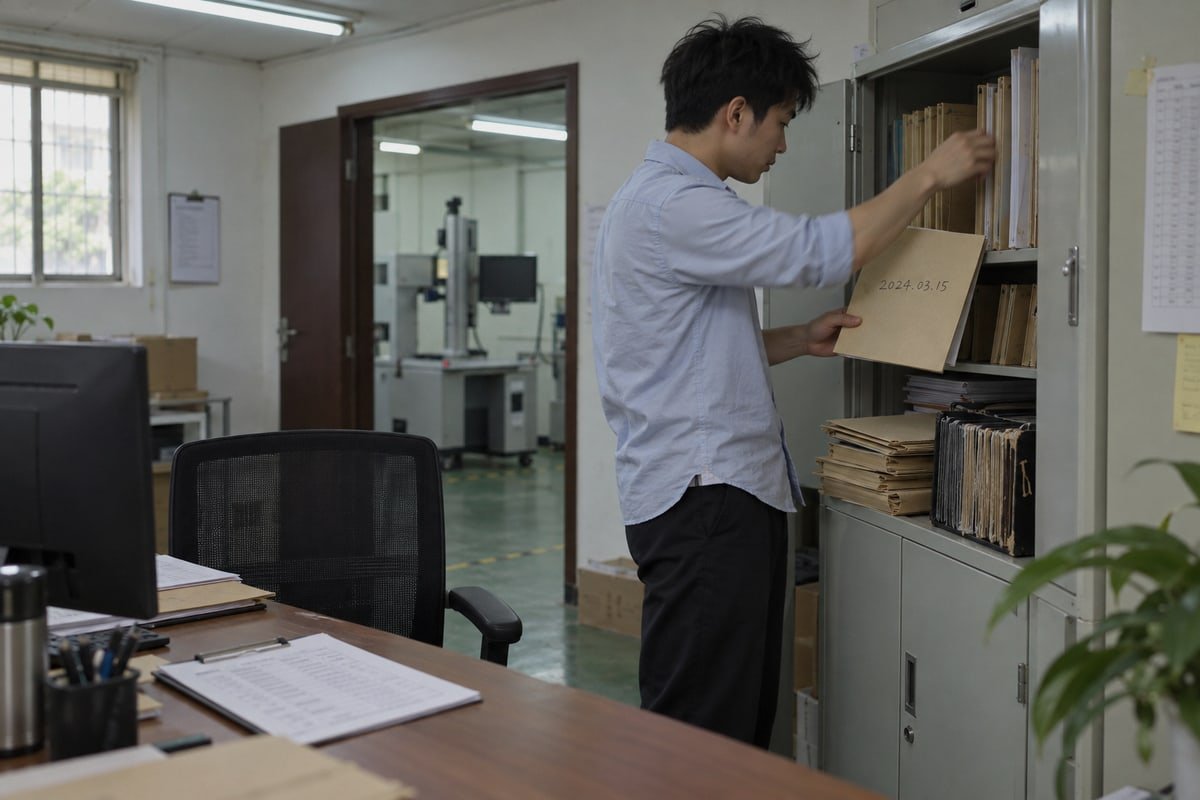
These five questions come directly from how we qualify our own document process at Lansulaser, and each one closes a specific gap. Let me unpack why each matters and what a good answer sounds like.
Question 1: Do You Have Stable Experience Issuing COs?
You want a supplier with a routine, not a scramble. Ask how many CO applications they handle per month and who on their team files them. A supplier with registered declaration personnel and a standing relationship with the issuing body will answer instantly. Hesitation here predicts delay later.
Question 2: Can You Provide the Certificate My Country Requires?
Confirm the exact form. Buyers in ASEAN countries like Vietnam, Thailand, and Malaysia often need Form E or RCEP certificates to claim preferential tariff treatment. European and North American buyers usually need a General CO with Chamber of Commerce authentication, or a self-certified origin statement depending on Free Trade Agreement 5 compliance rules. The wrong form can cost you the entire duty saving.
Question 3: What Is the Timeline for Application, Issuance, and Delivery?
Get three separate numbers: days to apply, days to issue, and days to deliver the original to you or your bank. Then compare that total against your shipping schedule. "On time" means before packing and export booking closes, not after the cargo is on the vessel.
Question 4: Can You Show Samples from Similar Past Orders?
Covered above, but worth repeating: a sample CO from a comparable CCD laser marking machine order proves capability better than any promise.
Question 5: Will You Write This Into the Contract?
This is the step most buyers skip. Put the document type, delivery deadline, and responsibility for failure directly into the sales contract and proforma invoice. A strong clause states that the CO must be issued and scanned for your approval before the final balance is paid. Some buyers go further with a documentary credit clause that releases funds only upon digital authentication of the certificate. We accept these terms because we can meet them; a supplier who resists is telling you something.
Bonus: Verify Data Consistency Early
Also confirm that the country-of-origin wording will match across the invoice, packing list, machine nameplate, and the certificate itself. For industrial machines, a mismatch between the nameplate marking and the invoice can trigger clearance problems or even return shipment. Ask the supplier to send photos of the nameplate before packing. Cross-reference the HS code of the CCD vision system components against the machine's primary HS code as well, so the integrated unit clearly qualifies under value-added origin rules.
Which Red Flags Indicate a Supplier Might Fail to Deliver My Certificate of Origin on Schedule?
A purchasing manager from Saudi Arabia once told me he almost ordered from a supplier who promised "all documents included" but could not name the issuing body. He walked away. Good instinct.
Major red flags include vague answers about who issues the certificate, refusal to share past samples, no export registration, HS codes that shift between quotes, no clear shipping document lead time, and resistance to putting document deadlines into the contract.

Many suppliers now advertise that certificates of origin are handled in-house. That phrase sounds reassuring, but it does not always mean they can issue a valid document quickly, or for your destination's specific rules. In-house handling of HS code classification and commercial invoicing is a real capability signal, but you still need to test it. Here are the warning signs I would act on, ranked by severity.
| Red Flag | Severity | What It Usually Means |
|---|---|---|
| Cannot name the issuing body (CCPIT, Chamber, customs platform) | Critical | They have never actually filed an application |
| No export registration or business license shown | Critical | They are a trading intermediary without legal issuing authority |
| Refuses to share a masked sample CO | High | No history with your product category or destination |
| HS code changes between quotation and invoice | High | Weak HS code classification discipline; customs clearance documentation will conflict |
| "The certificate comes after shipment" | High | Timing failure guaranteed if your country needs originals pre-arrival |
| No answer on eCO or verification method | Medium | Courier dependency and no digital authentication path |
| Resists contract clauses on document deadlines | Medium | Low confidence in their own document process |
The Assembly Question Nobody Asks
Here is a subtler risk. A Certificate of Origin certifies that substantial transformation happened in the stated country. If a supplier merely assembles machines from a complete kit of imported parts, the product may not legally qualify for a Chinese CO at all. You can test this by requesting a manufacturer's affidavit or an internal production log covering the CCD integration phase, which shows the vision-guided laser marking system was genuinely built and integrated at the factory. A factory audit report from a third-party quality inspection firm like SGS or Intertek can confirm the same thing while also verifying build quality. At our facility, we welcome these audits because our 20 solution design engineers do the CCD integration work on-site, and the production records prove it. Export permit verification and a factory audit together answer both questions buyers care about: is the machine real, and is the paperwork legitimate?
When a Verbal Promise Is Not Enough
Some buyers argue that a sales team's assurance is sufficient. It is not. Trade guidance is clear that generic certificates may require third-party certification through a chamber, while FTA origin statements follow specific self-certification rules. The sales rep who says "no problem" may not know which path your shipment needs. Always verify the path, not the promise.
Conclusion
Certificate of Origin delays quietly wreck machine import schedules. Verify capability, check track records, ask hard questions, watch for red flags, and lock everything into your contract before paying.
Footnotes
1. Homepage of the International Chamber of Commerce, the primary body for international trade documentation standards. ↩︎
2. Official World Customs Organization page for the Harmonized System used to classify traded products globally. ↩︎
3. WTO guide on rules of origin and their application for obtaining preferential tariff rates in international trade. ↩︎
4. Authoritative ICC resource explaining the global standards and verification processes for certificates of origin. ↩︎
5. Official U.S. government overview of how free trade agreements influence customs duties and origin requirements. ↩︎