

Comparing pricing transparency among CCD laser marking machine suppliers frustrated many buyers I meet. Quotes look similar, then hidden fees appear. On our Dongguan production line, we see this problem weekly.
Compare pricing transparency by demanding itemized quotes that separate standard from optional configurations, list all extra fees, publish maintenance and consumable prices, and state a quote validity period. Suppliers who disclose laser source brand, CCD specs, MOQ, and delivery terms are transparent; single headline numbers are not.
That sounds simple. In practice, it is not. Let me walk you through exactly what to check, in the order I recommend to our own customers.
What Hidden Costs Should I Watch for When Comparing CCD Laser Marking Machine Quotes?
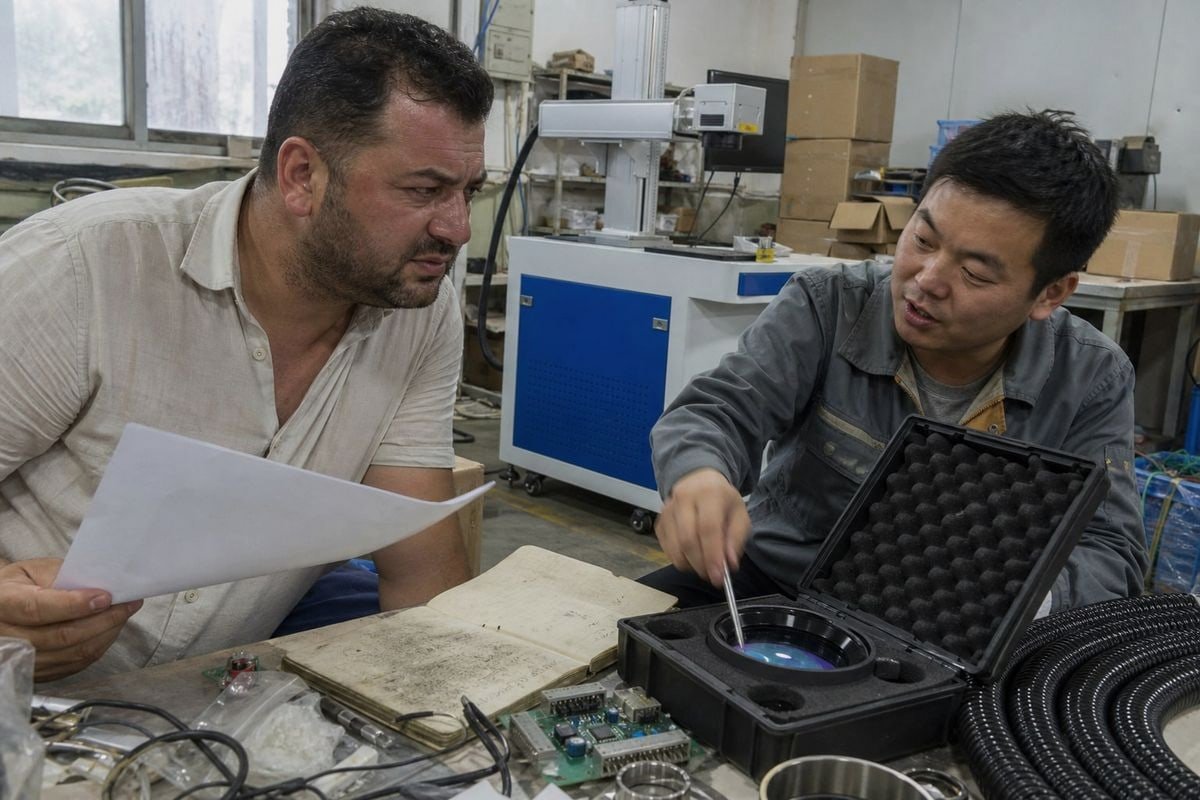
Last year, a buyer from Turkey showed me a competitor's quote that was 30% below ours. Our engineers reviewed it line by line. The camera software license was missing entirely.
Watch for software licensing fees, integration and PLC communication charges, shipping and import duties, installation and training costs, spare optics like F-theta lenses, fume extraction requirements, and compliance activation fees. These hidden items can add 20–40% to a headline machine price.
The headline price of a vision-guided laser system is rarely the true landed cost. In our export experience across the UK, Italy, the USA, and Southeast Asia, the gap between the quoted price and the total cost of ownership is where most buyer regret comes from.
The Most Common Hidden Cost Categories
Here are the items I see omitted most often. Each one can shift your budget significantly.
| Hidden Cost | Typical Impact | Why It Gets Hidden |
|---|---|---|
| Vision software licensing fees | One-time perpetual vs. annual subscription; can add thousands over 5 years | Suppliers quote hardware only |
| PLC/API integration fees | Custom communication protocols for automated lines | Only surfaces after order confirmation |
| Shipping, import duties, customs clearance | Varies by destination and Incoterm | FOB quotes look cheaper than DDP |
| Installation and training costs | On-site visits are billable in many contracts | "Free support" thresholds are undefined |
| F-theta lenses and protective windows | High-speed CCD marking accelerates lens contamination | Consumables list not published |
| Fume extraction and power draw | Recurring utility expense; specific CFM requirements matter | Treated as "buyer's responsibility" |
| Compliance modules (e.g., 21 CFR Part 11) | Medical/aerospace audit-trail software carries activation fees | Marketed as optional, but mandatory for your sector |
One point deserves extra attention: software licensing structures. Some suppliers bundle a perpetual license for the automated visual positioning software 1. Others charge a mandatory annual subscription for algorithm updates, sometimes framed as a "smart service" fee for AI-enhanced calibration. Over five years, the subscription model can cost more than the camera hardware itself. Always ask which model applies before you compare two quotes.
Another quiet cost is the upgrade path. A transparent supplier will tell you whether the chassis supports a future fiber laser source swap 2 or a higher-resolution CCD camera, ideally with a fixed-price upgrade roadmap. If it does not, your "cheaper" machine may need full replacement in three years.
How Can I Verify If a Supplier's Price Breakdown Is Honest and Complete?
There is a trade-off we weigh at our factory every time we quote: a fully itemized breakdown takes longer to prepare, but it wins the trust of serious purchasing managers. Speed versus clarity. We choose clarity.
Verify honesty by requiring five disclosures: an itemized quote, a clear split between standard and optional configuration, all extra fees stated upfront, published maintenance and consumable prices, and a stated quote validity period. Any supplier refusing these five items is hiding something.
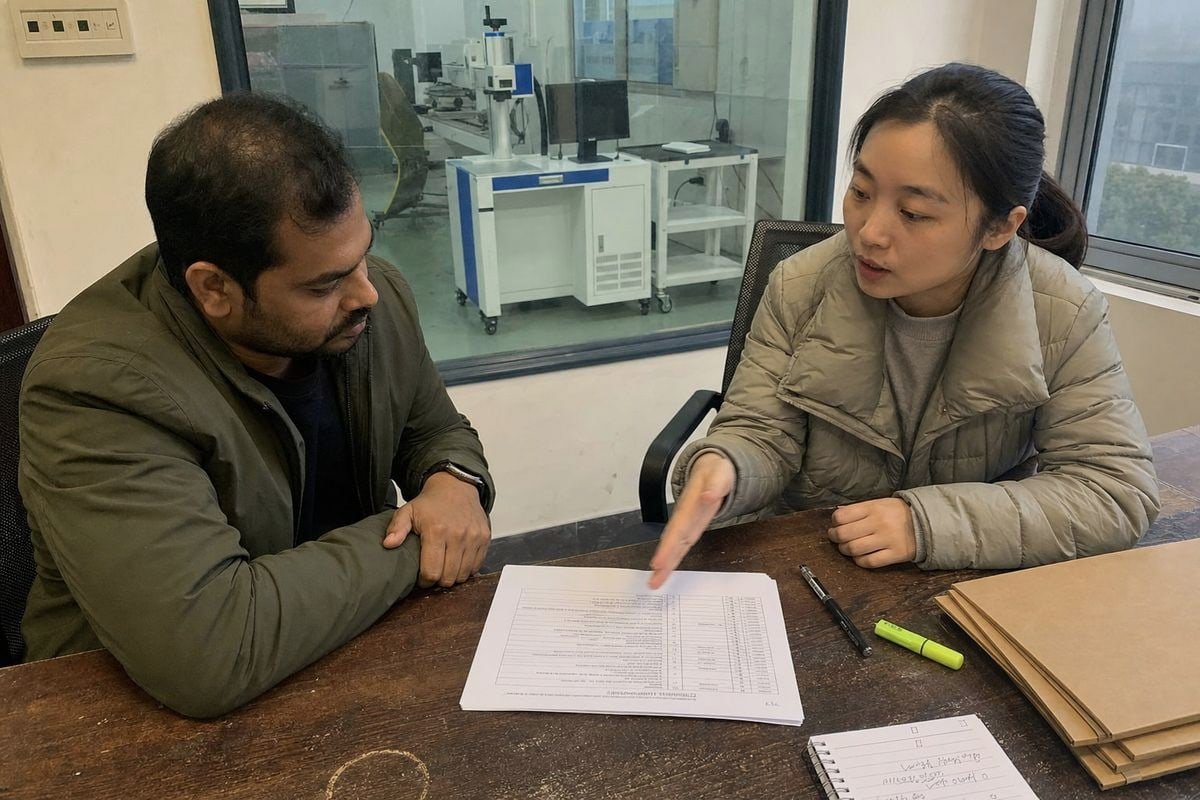
From years of preparing export quotations, I have distilled the verification process into five checks. These come directly from how we structure our own quotes, and I believe every buyer should demand the same from any supplier.
The Five-Point Transparency Test
- Itemized line pricing. Every component gets its own line: laser source, galvo head, CCD camera module, lens, control software, worktable, fixtures. A lump sum hides markup and scope gaps.
- Standard versus optional configuration. The quote must clearly mark what is included by default and what costs extra. Autofocus, conveyor integration, rotary axes, and higher-resolution cameras are common "assumed included" traps.
- All extra fees stated. Packaging, inland freight, port charges, documentation fees, and payment surcharges should appear in writing, not in a follow-up email after you commit.
- Published maintenance and consumable prices. Ask for the price list of wear parts — F-theta lenses, protective windows, filters — plus a projected replacement schedule. If a supplier won't show maintenance and spare parts pricing before the sale, expect painful pricing after it.
- Quote validity period. A serious quotation states how long the price holds. Laser source costs and exchange rates move. An open-ended quote invites later "price adjustment" disputes.
Cross-Check the Technical Claims
An honest price breakdown also names names. The fiber laser source brand should be specified exactly — the manufacturer and series — because the source can account for up to 50% of the machine's value 3 and determines duty cycle and lifespan. The same goes for machine precision specifications: repeat accuracy, camera resolution, and field size should be written into the quote, not left as verbal promises. Vague phrases like "high-precision CCD" are the failure signal. Ask for the datasheet.
Finally, confirm the seller's identity. A manufacturer, a trading company, and a marketplace aggregator all present prices differently, and each layer adds markup and changes who actually delivers warranty and technical support.
Why Do CCD Laser Marking Machine Prices Vary So Much Between Chinese Suppliers?
A Canadian project manager once sent me four quotes for "the same" CCD laser marking machine, ranging from under US$3,000 to over US$14,000. He asked if three of the suppliers were cheating him. My answer: probably none of them were — they were quoting four different machines.
Prices vary because CCD laser marking machines are not one uniform product. Laser type and power, camera resolution, automation level, software scope, seller business model, and included services all differ. Published listings range from roughly US$2,899 to US$15,000 per set for machines sharing the same category name.
The market data proves the spread. Here is what published listings actually show for machines carrying the "CCD" or "vision positioning" label:
| Machine Type | Published Price Range | What Drives the Price |
|---|---|---|
| Entry CCD vision positioning marker | US$2,899–3,330 per set | Basic vision alignment, quantity-based pricing, MOQ conditions |
| CCD camera UV marker with conveyor belt | US$3,800–5,000 per piece | UV source premium plus conveyor integration |
| Ultra-small-parts CCD automatic fiber marker | US$7,500–15,000 per set | High-precision automated visual positioning for tiny components |
| Desktop stainless-steel engraver with CCD visual position | US$13,000–15,000 per set | Specialized build, sold by a combined manufacturer/trading entity |
| Indian directory listing, CCD marker with conveyor | INR 600,000 expected price | Local currency, local duties, different landed-cost basis |
For comparison, general fiber marking machines without vision start far lower — some entry-level fiber systems list from around US$880, with broader ranges up to US$22,000 depending on configuration. So the CCD capability usually adds a premium, but the premium varies widely by machine type and bundled features.
The Real Drivers Behind the Spread
Beyond configuration, three structural factors matter. First, specification drift: the phrase "CCD visual positioning" can mean anything from basic vision alignment to automatic focus or high-precision 4K CCD positioning. Second, MOQ distortions: a low per-unit quote may only apply at five or more units, while the single-unit price is much higher. Third, quote basis: some suppliers show FOB reference prices, others show expected retail prices, and some omit whether tooling, software, installation, and training costs are included at all.
At our Dongguan facility, our 20 solution design engineers customize machines per application — irregular parts, PCB boards 4, medical devices, battery components. Two customers with the same industry can legitimately receive different prices because their fixtures, camera specs, and line integration differ. Price variation is not the red flag. Unexplained price variation is.
What Questions Should I Ask Suppliers to Get a Truly Transparent Price Quote?
The lesson that shaped our quoting policy came from a Filipino buyer who almost walked away. He did not doubt our machine; he doubted our paperwork. Once we sent a fully itemized sheet with validity dates and consumable pricing, he ordered two units.
Ask for an itemized breakdown, the exact fiber laser source brand and CCD specs, standard versus optional scope, software license type, warranty and service terms, spare parts pricing, delivery Incoterms, production lead time, and the quote's validity period. Put every answer in writing before comparing suppliers.
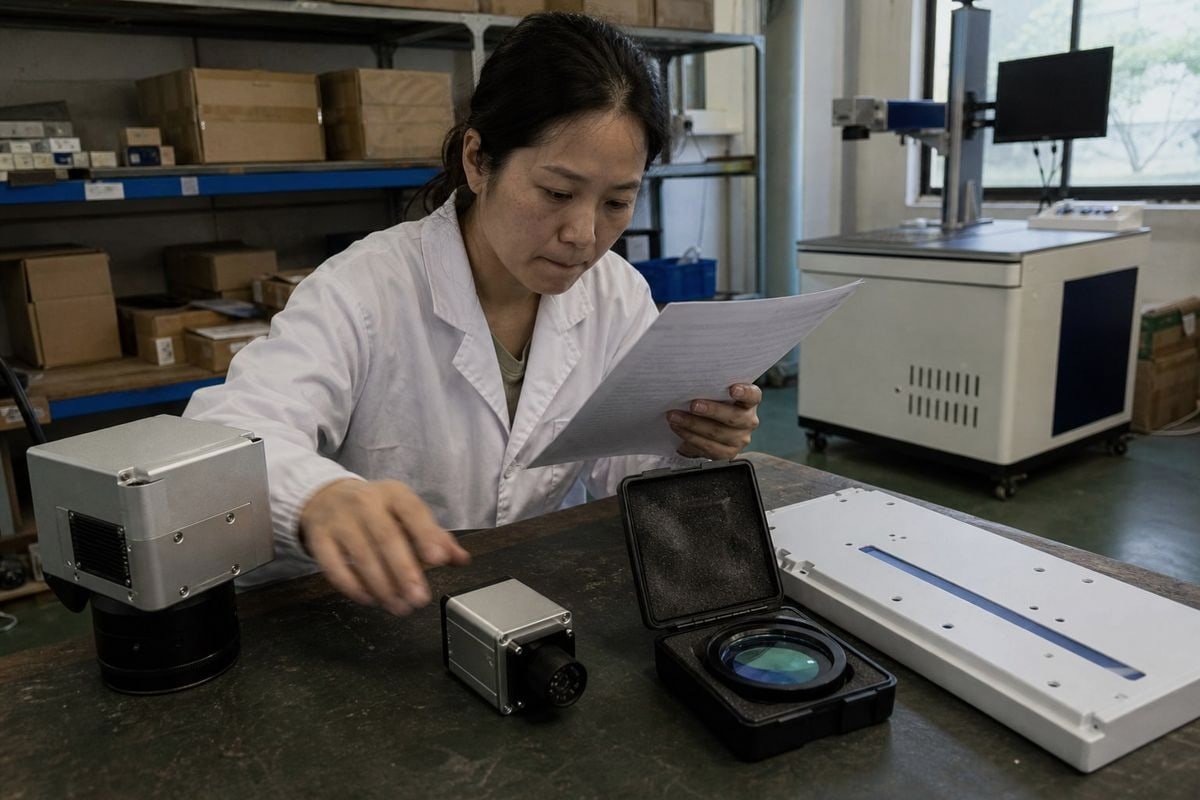
I recommend sending every shortlisted supplier the same standardized question sheet. That forces comparable answers and exposes evasive sellers quickly. Here is the exact framework, mapped to what each question protects you from:
| Question to Ask | What It Protects You From |
|---|---|
| Can you itemize every component and its price? | Lump-sum quotes hiding markup and scope gaps |
| Which fiber laser source brand and series is fitted? | Cheap sources with short lifespans and low duty cycles |
| What are the exact CCD camera resolution and repeat accuracy? | Specification drift behind the "vision positioning" label |
| What is standard, and what is optional at extra cost? | Assumed-included features billed later |
| Is the vision software a perpetual license or a subscription? | Recurring software licensing fees inflating 5-year TCO |
| What do installation, training, and commissioning cost? | Billable "free support" surprises after delivery |
| What is your published price list for lenses, windows, and filters? | Uncontrolled maintenance and spare parts costs |
| What are the warranty terms and the after-sales service agreement? | Undefined thresholds where free support becomes billable |
| Do you offer field service, remote diagnostics, or both — and at what cost? | Paying for on-site visits you assumed were covered |
| What Incoterm applies, and who handles import duties and shipping? | Landed-cost surprises at customs |
| What is the production lead time, and is it contractual? | Delivery delays that stall your line |
| How long is this quote valid? | "Price adjustment" disputes after you budget |
One More Layer for Regulated and Automated Buyers
If you run medical or aerospace production, ask specifically whether traceability and audit-trail modules — such as 21 CFR Part 11 compliance features 5 — carry separate activation or validation fees. If you plan line automation, ask what PLC communication protocols are supported natively and what custom API work costs. And if sustainability matters to your company, ask whether the supplier offers buy-back or recycling credits for depleted fiber laser sources at end of life — an emerging transparency signal as regulations tighten.
A supplier who answers all of these in writing, quickly and specifically, is showing you how they will behave after your money arrives. That behavior is the real product you are buying.
Conclusion
Cheap price is not transparent price. Demand itemized quotes, clear scope, disclosed fees, published consumable pricing, and validity dates — then compare CCD laser marking machine suppliers on equal, honest terms.
Footnotes
1. Technical overview of the machine vision technology used in CCD-guided laser systems. ↩︎
2. Explains the core fiber laser technology mentioned as a critical machine component. ↩︎
3. ISO standards define the technical and safety benchmarks that determine industrial machine value. ↩︎
4. The leading technical authority for electronics and circuit board manufacturing standards. ↩︎
5. Authoritative source for the mentioned medical and aerospace regulatory compliance standard. ↩︎