
Choosing between installment payment 1 and L/C for a CCD laser marking machine confuses many buyers. Our Dongguan factory has shipped to 17 countries, and payment disputes hurt more than spec disputes.
Choose installment payment when cash flow is tight, the deal is domestic or relationship-based, and margins can absorb interest. Choose a letter of credit for cross-border, high-value CCD laser marking machine orders where bank-backed security matters more than paperwork and 1%–3% in fees.
Both methods work. But they solve different problems. One protects your cash. The other protects your shipment. Let me walk you through how to decide, based on real export experience.
How Do I Decide Between Installment Payment and L/C for My Laser Marking Machine Order?
Last year, a Turkish buyer and a Vietnamese buyer ordered the same CCD model from us in the same month. They chose opposite payment methods — and both were right.
Decide using five factors: your cash flow position, the country and banking risk, your profit margin, the order amount, and your company's financial policies. Tight cash favors installments; cross-border deals with reliable banks favor an L/C; thin margins should avoid installment interest.
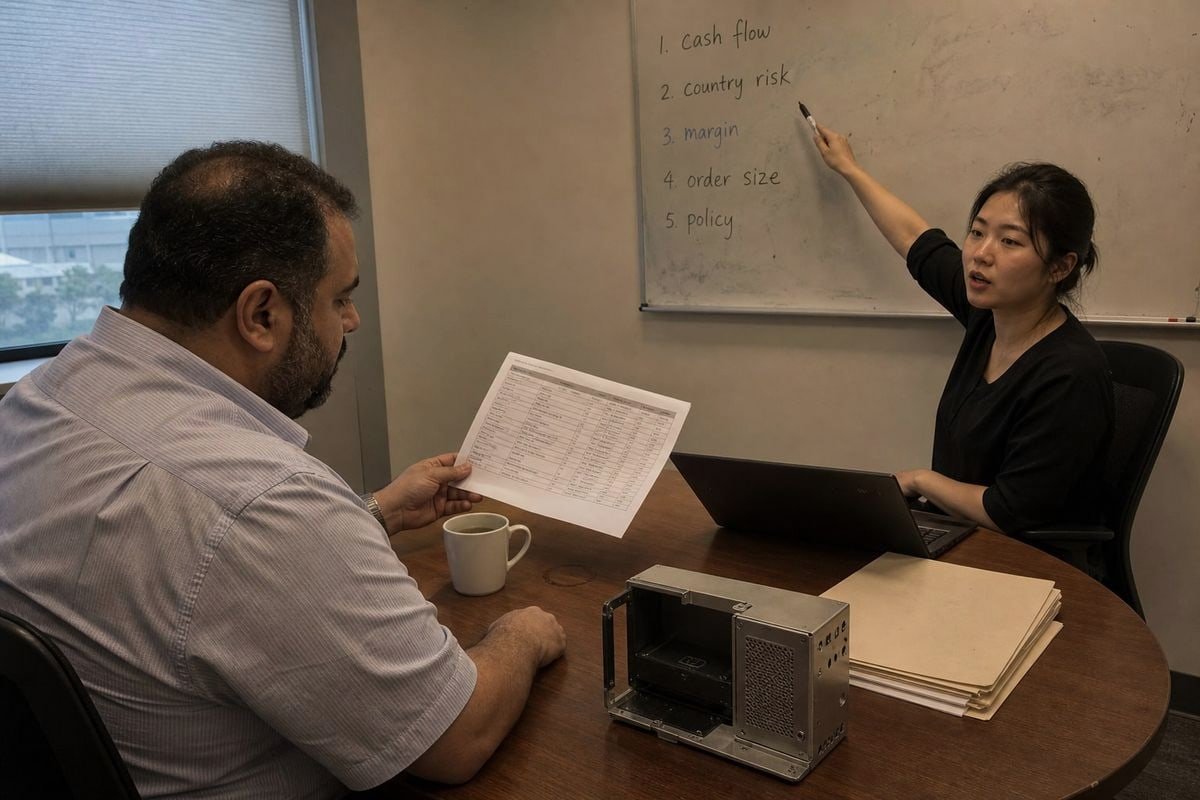
In my experience negotiating terms with buyers from Italy to Indonesia, the decision is rarely about which method is "better." It is about which method fits your situation. Here is the five-factor framework I share with purchasing managers, drawn directly from deals we have closed.
The Five-Factor Decision Framework
| Factor | Choose Installment When… | Choose L/C When… |
|---|---|---|
| Cash flow | Money is tight; you need the machine producing before it is fully paid | You have capital available and want document control |
| Country/bank risk | You operate in a region with weak banking infrastructure | Your bank is reliable and L/C issuance is routine |
| Profit margin | Margins are healthy enough to absorb interest | Margins are thin and financing charges would erase profit |
| Order amount | Smaller, single-unit purchases | High-value or multi-unit system orders |
| Financial policy | Your company allows seller financing on capital expenditure | Your finance team requires bank-mediated trade finance |
Each factor deserves a hard look. If you are short on cash, installments keep your working capital 2 free. That is the single biggest driver I see. But country risk cuts the other way. If your bank is trustworthy and L/C issuance is smooth, the documentary route gives both sides confidence. In regions where banks are slow or unreliable, buyers often push for installment structures instead, because the L/C process becomes a bottleneck.
Profit margin is the factor buyers forget. If your marking work runs on thin margins, installment interest quietly eats your return. A low-margin job shop paying financing charges on top of the machine price may end up worse off than saving for a telegraphic transfer or opening a sight L/C.
Order amount matters too. L/C bank fees add roughly 1%–3% to procurement cost, which is proportionally painful on a small single-machine deal but trivial on a multi-unit line. Finally, check your own financial system. Some companies simply prohibit unsecured installment obligations on capital equipment.
What Are the Risks I Should Consider Before Choosing a Payment Method for My CCD Machine?
A buyer in the Philippines once asked me a blunt question: "Stella, what goes wrong most often?" My honest answer surprised him — it is usually the paperwork, not the machine.
Key risks include higher total cost and collateral demands with installments, plus enforcement difficulty across borders; with L/Cs, the risks are bank fees, strict documentary compliance where small errors delay payment, and administrative burden that can outweigh benefits on small orders.

Risk mitigation starts with knowing exactly what can fail under each structure. After years of exporting CCD laser marking machines with visual positioning systems to markets like the UK, Germany, and Saudi Arabia, I group the risks into three buckets: cost risk, enforcement risk, and document risk.
Cost Risk
Installment plans usually carry interest, and many require a down payment of 30% to 50% upfront. Over the full term, your total cost of ownership can end up meaningfully higher than a lump-sum payment. If your margin is thin, this is the risk that matters most. Skip installments and negotiate a sight L/C or straight telegraphic transfer instead.
L/Cs have their own cost profile: opening fees, confirmation fees, and amendment charges typically add 1%–3%. On a multi-unit order, that is cheap insurance. On a single entry-level machine, it can feel disproportionate.
Enforcement Risk
Here is the asymmetry buyers should understand. Installment agreements are contracts between two companies. Domestically, they are enforceable in court. Across borders, enforcement gets hard and expensive — which is why sellers hesitate to offer installments internationally, and why buyers in weak-banking regions still sometimes prefer them when L/C issuance is impractical.
Document Risk
An L/C pays only against compliant documents — the bill of lading 3, inspection certificate 4s, packing lists. A misspelled consignee name can freeze payment for weeks. That delay hits the seller first, but it delays your machine release too. For sensitive CCD optical components, however, the required third-party inspection certificate is actually a benefit: it forces a quality checkpoint before money moves.
| Risk Type | Installment Payment | Letter of Credit |
|---|---|---|
| Cost | Interest raises total cost; 30%–50% down payment common | 1%–3% in bank and amendment fees |
| Enforcement | Weak across borders; may require collateral or title retention | Bank-guaranteed; strong legal framework |
| Documents | Light paperwork | Strict compliance; minor errors cause payment delays |
| Quality control | Depends on contract terms | Inspection certificates can be mandatory before payment |
Can Installment Payment Help Me Manage Cash Flow When Buying a Laser Marking Machine?
One of our long-term customers in Malaysia runs a hardware tools marking shop. He told me his first machine "paid its own installments" — the marking revenue covered each monthly payment within the first quarter.
Yes. Installment payment spreads the capital expenditure over months or quarters, preserving working capital for materials, wages, and orders. If the CCD machine generates marking revenue quickly, production income can effectively cover the payments as they come due.
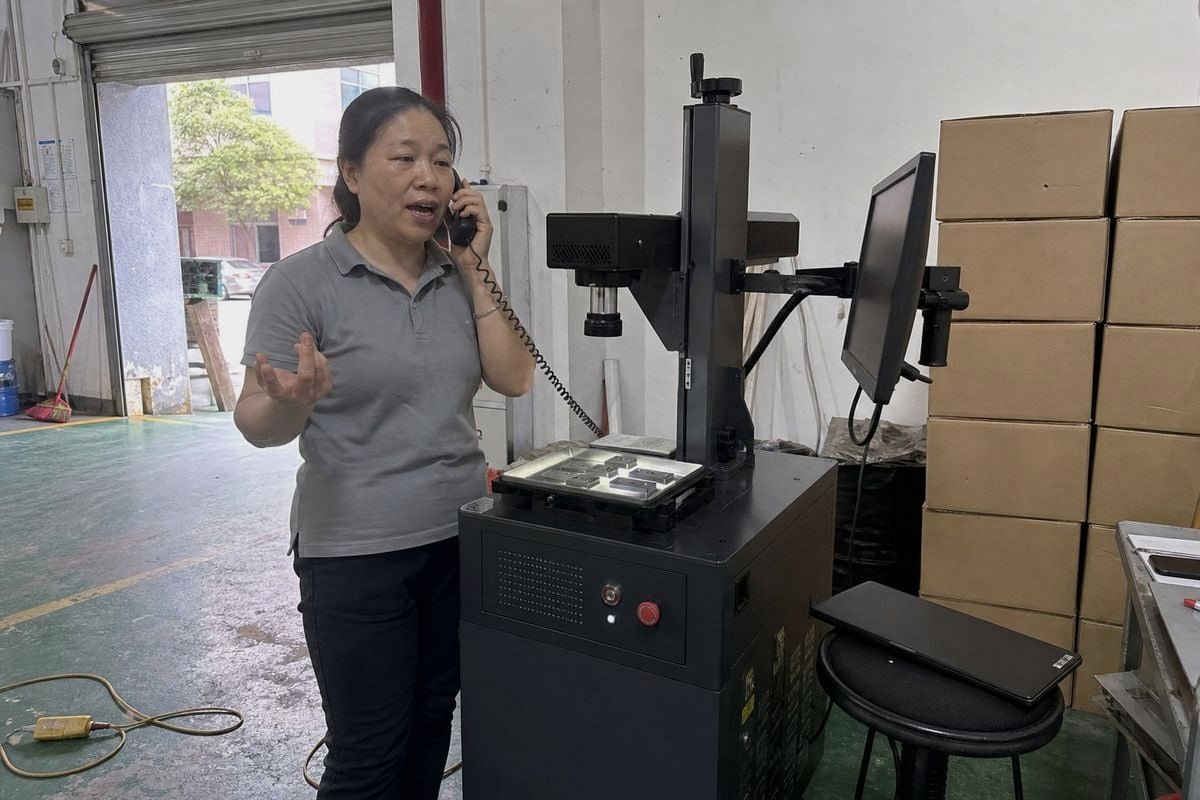
Cash flow management is the strongest argument for installments, and it deserves an honest examination rather than a sales pitch. A CCD laser marking machine is a revenue-generating asset. It marks auto parts, PCB boards, battery components, and medical devices from day one. So the pro-installment logic goes: if the machine helps generate revenue quickly, paying over time is more rational than locking up working capital in a lump sum.
I largely agree — with conditions. Here is how a typical installment structure works for equipment financing:
- Approval. The seller or a finance partner reviews your credit. Some laser vendors run in-house monthly payment plans after a simple approval process.
- Down payment. Expect 30% to 50% upfront. This is not optional for most sellers; it covers component procurement, especially the fiber laser source 5 and CCD camera module.
- Delivery and commissioning. The machine ships, gets installed, and starts producing.
- Scheduled payments. Monthly or quarterly installments run until the balance clears. Some contracts include retention of title until the final payment.
Now the objection sellers raise, and it is fair: collection risk. When we evaluate installment requests at our Dongguan facility, we look at the buyer's country, order history, and guarantees. Domestic and relationship-based deals get flexibility. First-time overseas buyers usually do not — not because we distrust them personally, but because cross-border enforcement is genuinely weak.
Two emerging structures are worth watching. Usage-based installments tie payments to actual laser strike counts or production volume via the machine's IoT connectivity — you pay more when you produce more. And green-tier industrial financing now offers preferential installment rates for laser systems that demonstrably cut material waste and chemical usage compared with inkjet or etching. Laser marking often qualifies, which can shave real cost off your plan.
The bottom line: installments are a financing choice. If cash is your constraint and your margin can absorb the interest, they work. If your margin is thin, they quietly bleed you.
Is L/C the Safer Option When I'm Importing a CCD Laser Marking Machine from China?
The trade-off I weigh on every export quote is simple: speed versus security. A telegraphic transfer closes deals faster. An L/C closes them safer. For imports from China, most experienced buyers pick safer.
For cross-border purchases, yes. An L/C makes payment conditional on compliant shipping documents, protecting you from non-delivery and the seller from non-payment. It is the standard trade finance instrument for high-value, customized, or first-time imports of industrial machinery.

When buyers from Italy or the USA import from us for the first time, supplier authenticity is their number-one fear — understandably. An L/C directly answers it. Your bank commits to pay only when we present documents proving the machine actually shipped as agreed. Neither side has to trust the other blindly; both trust the banks.
How the L/C Workflow Actually Runs
The process is simpler than it sounds. You apply to your bank to open the L/C in our favor. We build the machine — including calibrating the visual positioning system to your product samples — and ship it. We then present the bill of lading, invoice, packing list, and any required inspection certificate to the bank. Once documents check out, payment releases.
Sight L/C vs. Usance L/C
| Type | When Payment Occurs | Best For |
|---|---|---|
| Sight L/C | Immediately upon compliant document presentation | Sellers wanting fast settlement; standard machine orders |
| Usance / deferred L/C | 30–120 days after documents are accepted | Buyers preserving short-term cash flow on larger orders |
| Installment-backed / standby L/C hybrid | Down payment plus staged or guaranteed settlement | Cross-border deals needing both financing and security |
Note the usance option carefully. It quietly solves the "installment versus L/C" dilemma for many importers: you get bank-backed security and a 30–120 day payment deferral. Some export-credit programs go further, combining a down payment with an installment L/C or standby L/C guarantee — a genuine hybrid.
Some buyers push back that L/Cs are slow, document-heavy, and bank-controlled. There is truth in that, and blockchain-based smart contract L/Cs are beginning to compress processing from weeks to hours while cutting intermediary fees. But the counterargument stands: for imported capital equipment, the cost of a failed shipment or an unresolvable supplier dispute far exceeds the L/C fee. On our side, an L/C also gives us the confidence to start building a customized machine, because payment is bank-guaranteed once we perform. Fixed shipment deadlines written into the L/C also directly address delivery-delay worries.
Conclusion
Match the method to your situation: installments for cash flow relief on domestic or trusted deals, L/C for cross-border security, and hybrids when you need both.
If cash is tight, choose installments — but only if your margins survive the interest. If you are importing a high-value or customized CCD laser marking machine, the L/C's document control and bank guarantee are worth the fees. Run through the checklist before you sign: supplier location, machine customization, cash you can safely commit, bank fees versus financing charges, and your own financial policies. And remember the middle path — a down payment plus a usance L/C often delivers both flexibility and protection. When you are ready to discuss terms on a specific configuration, we are happy to structure a payment plan around your production schedule rather than force you into ours.
Footnotes
1. Provides a foundational definition of installment-based purchasing and consumer credit structures. ↩︎
2. Explains the importance of maintaining liquid capital for small and medium-sized industrial enterprises. ↩︎
3. Authoritative UN resource defining standard shipping documents used in international maritime trade. ↩︎
4. Official government resource detailing common export documents including inspection certificates. ↩︎
5. Authoritative technical explanation of fiber laser technology and its components. ↩︎